


- Afhalen na 1 uur in een winkel met voorraad
- Gratis thuislevering in België vanaf € 30
- Ruim aanbod met 7 miljoen producten
- Afhalen na 1 uur in een winkel met voorraad
- Gratis thuislevering in België vanaf € 30
- Ruim aanbod met 7 miljoen producten




€ 36,45
+ 72 punten
Omschrijving
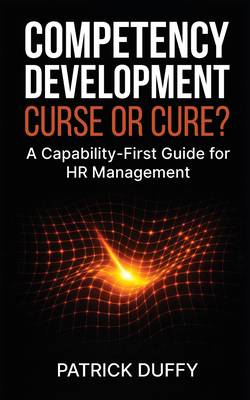
Competencies are everywhere. Capability is not.
For decades, organizations have invested heavily in competency frameworks, embedding them into hiring, performance management, leadership development, culture programs, and professional standards. Yet despite their widespread use, competencies remain one of the least examined and least governed tools in organizational life.
Competency Development Curse or Cure? asks a direct question: Has competency modeling become the answer to the wrong problem?
Drawing on organization science, human performance theory, and executive practice, this book challenges how competencies are defined, modeled, assessed, and governed. It shows how competency systems often drift into symbolic language, cultural enforcement, and performative compliance while failing to explain or improve actual performance.
At the center of the book is a clear position. Competencies only make sense when they are grounded in a broader understanding of organizational capability.
This is not an anti-competency argument. It is a capability-first guide that explains when competencies matter, when they do not, and how they must be positioned within a disciplined model of how organizations actually work.
The book introduces a structured domain architecture for competency modeling, explains why most assessment approaches fail at a structural level, and sets out how competency systems can be governed so they remain useful rather than becoming institutional routines with little performance value.
Inside the book, you will learn how to:
- Distinguish between competency frameworks and real organizational capability
- Identify where competency models add value and where they create confusion
- Understand why many competency assessments fail to predict or improve performance
- Design competency models that are aligned with work, performance, and outcomes
- Integrate competencies into a broader capability and organizational design framework
- Govern competency systems to ensure they remain relevant and evidence-based
The result is a more disciplined approach to competency development, one that replaces
assumption with evidence and aligns development efforts with actual organizational performance.
This book is written for HR leaders, organizational psychologists, learning and development professionals, executives, and practitioners who want to move beyond compliance-driven competency frameworks toward a more credible and effective approach.
This is not another generic competency guide. It is a practical framework for understanding when competencies contribute to performance and how they should be designed and governed within a capability led organization.
If you care less about having competencies and more about building real capability, this book provides a clear and practical path forward.
Part of the Vita Viri Organization and People series on organizational capability, leadership, work systems, HR strategy, and institutional design.
Specificaties
Betrokkenen
- Auteur(s):
- Uitgeverij:
Inhoud
- Aantal bladzijden:
- 258
- Taal:
- Engels
- Reeks:
Eigenschappen
- Productcode (EAN):
- 9781919268651
- Verschijningsdatum:
- 4/03/2026
- Uitvoering:
- Paperback
- Formaat:
- Trade paperback (VS)
- Afmetingen:
- 127 mm x 203 mm
- Gewicht:
- 258 g


Alleen bij Standaard Boekhandel
+ 72 punten op je klantenkaart van Standaard Boekhandel
AANGERADEN


Beoordelingen
We publiceren alleen reviews die voldoen aan de voorwaarden voor reviews. Bekijk onze voorwaarden voor reviews.