


- Afhalen na 1 uur in een winkel met voorraad
- Gratis thuislevering in België vanaf € 30
- Ruim aanbod met 7 miljoen producten
- Afhalen na 1 uur in een winkel met voorraad
- Gratis thuislevering in België vanaf € 30
- Ruim aanbod met 7 miljoen producten





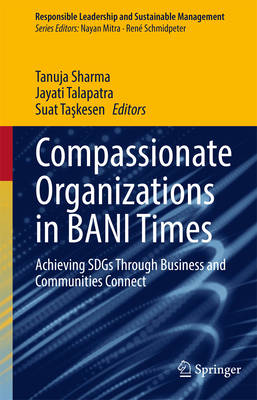
Compassionate Organizations in Bani Times
Achieving Sdgs Through Business and Communities Connect
€ 231,45
+ 462 punten
Omschrijving
This book captures the research and best practices of organizational responsibility towards employment generation and well-being issues, as well as ways to explore sustainable and responsible business solutions to address the current uncertain times. It offers a balanced blend of theory and documentation of real-life cases on these topics, with a shared vision of a more inclusive, equitable, and sustainable world. The insights offered in its chapters showcase the refinement, redevelopment, and reassessment of corporate strategies and public policy to incorporate sustainability, ESG, and SDG principles alongside business agendas. The book is valuable for implementing sustainable and ethical governance among policymakers, who can use the knowledge to create future compliance and non-compliance mechanisms for businesses. It also discusses emerging areas of green innovation and technology adoption, which can be utilized by policymakers, businesses, and academia alike to drive future green innovation strategies and ventures. The book offers sector-specific insights, including agriculture, banking, renewable energy, etc., that can be used to create targeted initiatives to address specific challenges. The chapters broadly cover three categories of research. Category 1--BANI Times and the Need for Compassion and Care (BANI being brittle, anxious, non-linear, and incomprehensible); Category 2--Businesses: Frameworks, Cases, and Models; and Category 3--Communities: Frameworks, Cases, and Models. The book serves as a guide for fostering a culture of sustainability, highlighting its multi-layered and colossal role in the development agenda and overall ethical decision-making.
Specificaties
Betrokkenen
- Uitgeverij:
Inhoud
- Aantal bladzijden:
- 294
- Taal:
- Engels
- Reeks:
Eigenschappen
- Productcode (EAN):
- 9789819559282
- Verschijningsdatum:
- 16/02/2026
- Uitvoering:
- Hardcover
- Formaat:
- Genaaid
- Afmetingen:
- 163 mm x 240 mm
- Gewicht:
- 598 g

Alleen bij Standaard Boekhandel
+ 462 punten op je klantenkaart van Standaard Boekhandel
Cadeau

AANGERADEN


Beoordelingen
We publiceren alleen reviews die voldoen aan de voorwaarden voor reviews. Bekijk onze voorwaarden voor reviews.