


- Afhalen na 1 uur in een winkel met voorraad
- Gratis thuislevering in België vanaf € 30
- Ruim aanbod met 7 miljoen producten
- Afhalen na 1 uur in een winkel met voorraad
- Gratis thuislevering in België vanaf € 30
- Ruim aanbod met 7 miljoen producten





Omschrijving
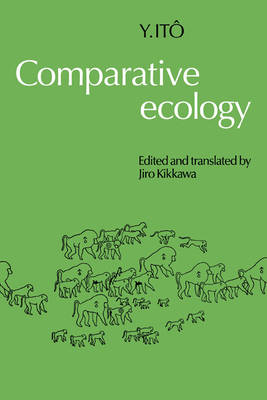
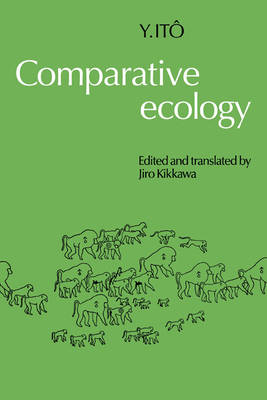
This 1980 book considers the patterns of population fluctuations of animals and intraspecific social relations by means of comparative methods and discusses the evolution of population regulation mechanisms and social relations. The author proposes that parental care has evolved in environments in which it is difficult for the young to obtain food, whilst high fecundity has evolved in the opposite environment. He presents evidence from a wide range of organisms to argue that during evolution animals repeatedly face the 'choice' of two strategies - low fecundity combined with parental protection, or high fecundity - and that this choice determined the amplitude, regularity and associated main factors of population fluctuations as well as the main characteristics of social relations as expressed in group life or dispersed living involving territory. Although many examples are drawn from insects, with which the author is most familiar, mammal, birds and other animal groups are also examined in depth.
Specificaties
Betrokkenen
- Auteur(s):
- Uitgeverij:
Inhoud
- Aantal bladzijden:
- 450
- Taal:
- Engels
Eigenschappen
- Productcode (EAN):
- 9780521298452
- Verschijningsdatum:
- 12/03/1981
- Uitvoering:
- Paperback
- Formaat:
- Trade paperback (VS)
- Afmetingen:
- 152 mm x 229 mm
- Gewicht:
- 653 g


Alleen bij Standaard Boekhandel
+ 181 punten op je klantenkaart van Standaard Boekhandel
AANGERADEN


Beoordelingen
We publiceren alleen reviews die voldoen aan de voorwaarden voor reviews. Bekijk onze voorwaarden voor reviews.