


- Afhalen na 1 uur in een winkel met voorraad
- Gratis thuislevering in België vanaf € 30
- Ruim aanbod met 7 miljoen producten
- Afhalen na 1 uur in een winkel met voorraad
- Gratis thuislevering in België vanaf € 30
- Ruim aanbod met 7 miljoen producten





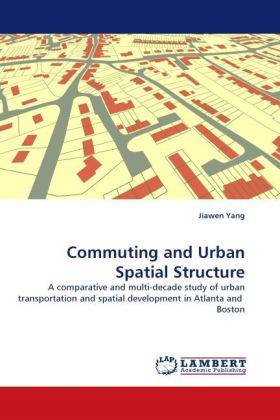
Commuting and Urban Spatial Structure
A comparative and multi-decade study of urban transportation and spatial development in Atlanta and Boston
Jiawen Yang
Paperback | Engels
€ 67,45
+ 134 punten
Omschrijving
In the past decades, USA metropolitan areas have experienced significant population growth and suburban development. At the same time, commuting time has lengthened and road congestion has increased. How to contain traffic growth in a context of suburban development has become a focus of urban transportation research and city and regional planning. This work interprets metropolitan wide commuting with a reference to the metropolitan wide growth trends. Three decades of census data (1980, 1990 and 2000) for two metropolitan areas (Boston and Atlanta) are used to illustrate the linkage between commuting and urban spatial development. A commuting spectrum method is developed to characterize urban spatial structure, particularly job-housing proximity, across space, over time and among different regions. The work recommends a constrained and balanced vision of urban growth for improving transportation efficiency. The work should be useful for researchers, planners and policy makers in the field of urban geography, urban transportation and city and regional planning.
Specificaties
Betrokkenen
- Auteur(s):
- Uitgeverij:
Inhoud
- Aantal bladzijden:
- 176
- Taal:
- Engels
Eigenschappen
- Productcode (EAN):
- 9783838347226
- Verschijningsdatum:
- 27/06/2010
- Uitvoering:
- Paperback
- Afmetingen:
- 150 mm x 220 mm
- Gewicht:
- 250 g


Alleen bij Standaard Boekhandel
+ 134 punten op je klantenkaart van Standaard Boekhandel
Cadeau

AANGERADEN


Beoordelingen
We publiceren alleen reviews die voldoen aan de voorwaarden voor reviews. Bekijk onze voorwaarden voor reviews.