


- Afhalen na 1 uur in een winkel met voorraad
- Gratis thuislevering in België vanaf € 30
- Ruim aanbod met 7 miljoen producten
- Afhalen na 1 uur in een winkel met voorraad
- Gratis thuislevering in België vanaf € 30
- Ruim aanbod met 7 miljoen producten





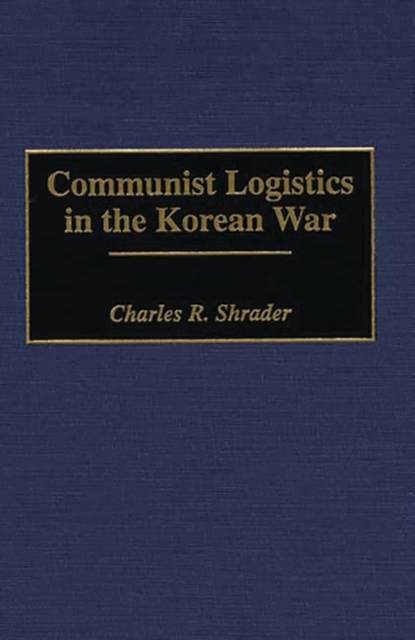
Communist Logistics in the Korean War
Charles R Shrader
€ 169,95
+ 339 punten
Omschrijving
This book describes the logistical systems and requirements of the North Korean People's Army and Chinese Communist forces during the Korean War. The author examines the performance of the Communist logistical system from June 1950 to July 1953, explaining the failure of the United Nations air interdiction campaign in terms of the constant improvement of Communist logistical capabilities. The author concludes that the United Nations air force damaged, but was unable to destroy, the Communist distribution system. The North Koreans and Chinese Communists were able to supply their front line units sufficiently to enable them to conduct a strong static defense, which prevented a United Nations victory, and in the last months of the war, to mount strong, sustained offensive actions.
Specificaties
Betrokkenen
- Auteur(s):
- Uitgeverij:
Inhoud
- Aantal bladzijden:
- 312
- Taal:
- Engels
- Reeks:
- Reeksnummer:
- nr. 160
Eigenschappen
- Productcode (EAN):
- 9780313295096
- Verschijningsdatum:
- 20/11/1995
- Uitvoering:
- Hardcover
- Formaat:
- Genaaid
- Afmetingen:
- 162 mm x 243 mm
- Gewicht:
- 657 g


Alleen bij Standaard Boekhandel
+ 339 punten op je klantenkaart van Standaard Boekhandel
Cadeau

AANGERADEN


Beoordelingen
We publiceren alleen reviews die voldoen aan de voorwaarden voor reviews. Bekijk onze voorwaarden voor reviews.