


- Afhalen na 1 uur in een winkel met voorraad
- Gratis thuislevering in België vanaf € 30
- Ruim aanbod met 7 miljoen producten
- Afhalen na 1 uur in een winkel met voorraad
- Gratis thuislevering in België vanaf € 30
- Ruim aanbod met 7 miljoen producten





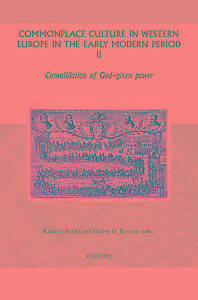
Commonplace Culture in Western Europe in the Early Modern Period II
Consolidation of God-Given Power
K.//Bossier P. Banks
€ 48,00
+ 96 punten
Omschrijving
This is the second of three volumes from the project 'Authority and Persuasion: the Role of Commonplaces in Western Europe (c.1450-c.1800)'. The project was launched by the universities of Copenhagen, Durham and Groningen and involved scholars from a range of disciplines who researched the use of commonplaces as a means of persuasion in the early modern world. Commonplaces as a technical term refers to the loci communes collected in late medieval and early modern commonplace books. In the project, however, the notion of commonplace was broadened to include means of persuasion in all kinds of texts as well as the visual arts, theatre, music and other media. This broader notion embraces metaphors, proverbs, figures, and expressions that enjoyed both a history of use in a given society or language community and a wide currency in that society. This is the second volume from the Commonplace Culture series. It analyses the use of commonplaces to bolster power, or sometimes to question it. The volume focuses on the seventeenth century. In the latter part of this period, the status and cognitive scope of the printed commonplace book declined; yet, as the essays in this volume demonstrate, the cognitive practices evidenced in commonplace books continued to enjoy good health. The 'commonplaces' analysed by contributors to this volume constitute cultural objects which gained persuasive potential from the exploitation of material bearing the authority of the past, yet they are not commonplaces stricto sensu. The essays in the volume examine not only written texts but also theatre, music, processions, ballets, and royal entries. In particular, the notion of the commonplace is taken into the visual domain, indicating that in the seventeenth century the visual was central to those diverse practices which sought to shore up God-given power through the pre-existing authority of commonplace material. The first volume concerns 'Reformation, Counter-Reformation and Revolt', and the third volume deals with 'Legitimation of Authority'.
Specificaties
Betrokkenen
- Auteur(s):
- Uitgeverij:
Inhoud
- Aantal bladzijden:
- 211
- Taal:
- Engels
- Reeks:
- Reeksnummer:
- nr. 40
Eigenschappen
- Productcode (EAN):
- 9789042924758
- Verschijningsdatum:
- 31/01/2011
- Uitvoering:
- Hardcover
- Formaat:
- Genaaid
- Afmetingen:
- 165 mm x 246 mm
- Gewicht:
- 544 g


Alleen bij Standaard Boekhandel
+ 96 punten op je klantenkaart van Standaard Boekhandel
Cadeau

AANGERADEN


Beoordelingen
We publiceren alleen reviews die voldoen aan de voorwaarden voor reviews. Bekijk onze voorwaarden voor reviews.