


- Afhalen na 1 uur in een winkel met voorraad
- Gratis thuislevering in België vanaf € 30
- Ruim aanbod met 7 miljoen producten
- Afhalen na 1 uur in een winkel met voorraad
- Gratis thuislevering in België vanaf € 30
- Ruim aanbod met 7 miljoen producten





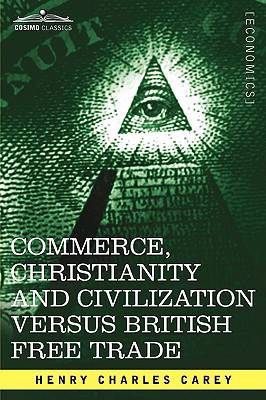
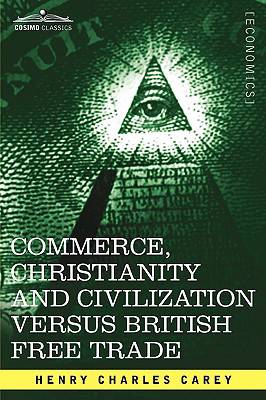
Commerce, Christianity and Civilization Versus British Free Trade
Letters in Reply to the London Times
Henry Charles Carey
Paperback | Engels
€ 18,95
+ 37 punten
Omschrijving
Early in the free-trade crusade it was announced in Parliament that the smuggler was to be regarded as "the great reformer of the age," and from that hour to the present all the aid in the power of that body to give him has been rendered; Gibraltar, Malta, Nova Scotia, Canada, and other possessions, having been chiefly valued for the facilities they have afforded for setting at defiance the laws of nations with which Britain has professed to be at peace. --from "Letter Fifth" American economist HENRY CHARLES CAREY (1793-1879), the chief economic advisor to President Abraham Lincoln, was a proponent of free trade early in his career, but later become a staunch believer in protectionism. This series of eight letters to the London Times, all written in early 1876, constitutes a concise summation of his defense of "American School" capitalism, utilizing tariff protection and government intervention, over the laissez-faire "British System." Rife with real examples from the world economy at the time and powered by the full force of Carey's not inconsiderable personality, this is a highly readable, hugely informative brief on the battle between two schools of economic thought of the period.
Specificaties
Betrokkenen
- Auteur(s):
- Uitgeverij:
Inhoud
- Aantal bladzijden:
- 48
- Taal:
- Engels
Eigenschappen
- Productcode (EAN):
- 9781605201511
- Verschijningsdatum:
- 1/11/2008
- Uitvoering:
- Paperback
- Formaat:
- Trade paperback (VS)
- Afmetingen:
- 152 mm x 229 mm
- Gewicht:
- 81 g


Alleen bij Standaard Boekhandel
+ 37 punten op je klantenkaart van Standaard Boekhandel
CADEAU


Beoordelingen
We publiceren alleen reviews die voldoen aan de voorwaarden voor reviews. Bekijk onze voorwaarden voor reviews.