


- Afhalen na 1 uur in een winkel met voorraad
- Gratis thuislevering in België vanaf € 30
- Ruim aanbod met 7 miljoen producten
- Afhalen na 1 uur in een winkel met voorraad
- Gratis thuislevering in België vanaf € 30
- Ruim aanbod met 7 miljoen producten





€ 47,45
+ 94 punten
Eenvoudig bestellen
Veilig betalen


Gratis thuislevering vanaf € 30 (via bpost)
Gratis levering in je Standaard Boekhandel
Omschrijving
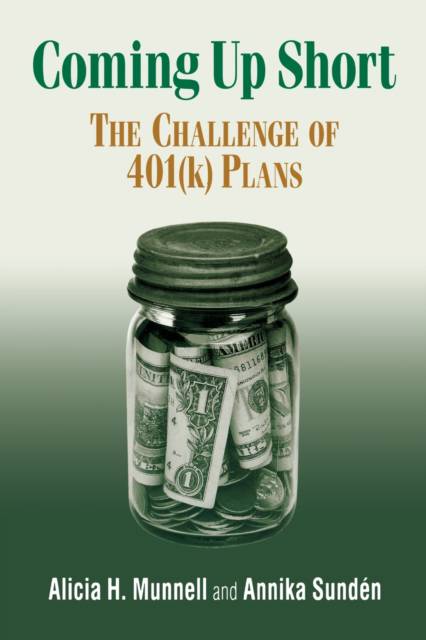
As the baby boom begins to withdraw from the labor force, ensuring a secure retirement income becomes an increasingly important issue, the number of people over age 65 is expected to double by 2030. That trend will continue, accompanied by worries about stock market volatility, corporate malfeasance, a rapidly changing economy, and the viability of Social Security. In Coming Up Short, two experts on retirement policy analyze 401(k) plans, the fastest-growing type of employer-sponsored pensions and a vital source of retirement income for the American middle class. Alicia Munnell and Annika Sunden chronicle the development of 401(k) plans, now the dominant form of private pensions. In accessible language, they explain how such plans work and discuss their popularity. For employees, these plans are appealing becuase they have more control over their own retirement funds, and the plans are portable. For employers, the plans are generally less costly than defined benefit plans. Despite those advantages, there are some significant downsides to 401(k) plans. These plans shift all the risk and responsibility to employees, who must decide whether to join, how much to contribute, how to invest, whether to ""cash out"" when changing jobs, and how to manage their nest egg in retirement. These are difficult decisions, and while in theory 401(k)s could be an effective savings vehicle for retirement, in practice many people make mistakes at every step along the way. Com ing Up Short discusses why these mistakes are made and proposes various reforms to ensure that the aging population will have adequate retirement income. Comprehensive and up-to-date, Coming Up Short is an essential resource on 401(k) plans for financial service professionals, policymakers, academics, and individuals planning for their own retirement.
Specificaties
Betrokkenen
- Auteur(s):
- Uitgeverij:
Inhoud
- Aantal bladzijden:
- 272
- Taal:
- Engels
Eigenschappen
- Productcode (EAN):
- 9780815758976
- Verschijningsdatum:
- 27/01/2005
- Uitvoering:
- Paperback
- Formaat:
- Trade paperback (VS)
- Afmetingen:
- 156 mm x 231 mm
- Gewicht:
- 312 g



Alleen bij Standaard Boekhandel
+ 94 punten op je klantenkaart van Standaard Boekhandel
CADEAU

AANGERADEN


Beoordelingen
We publiceren alleen reviews die voldoen aan de voorwaarden voor reviews. Bekijk onze voorwaarden voor reviews.