


- Afhalen na 1 uur in een winkel met voorraad
- Gratis thuislevering in België vanaf € 30
- Ruim aanbod met 7 miljoen producten
- Afhalen na 1 uur in een winkel met voorraad
- Gratis thuislevering in België vanaf € 30
- Ruim aanbod met 7 miljoen producten





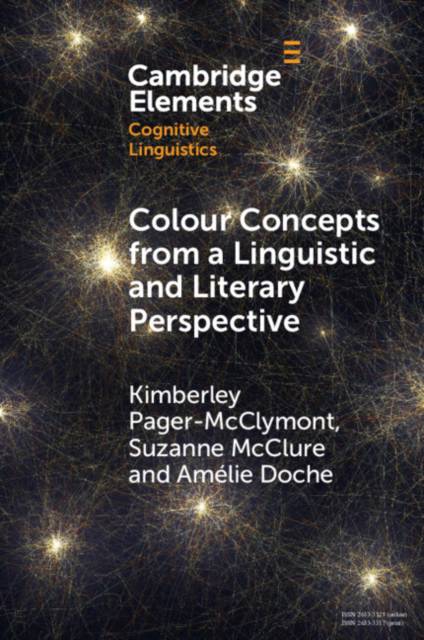
Colour Concepts from a Linguistic and Literary Perspective
Kimberley Pager--McClymont, Suzanne McClure, Amélie Doche
€ 36,45
+ 72 punten
Uitvoering
Omschrijving
This Element adopts a holistic approach to the processing of colours in language and literature, weaving together insights from cognitive linguistics, psychology, and literary studies. Through diverse case studies, it underpins the symbolic power of colours in evoking characters' emotional states, moral traits, and cultural perceptions (Section 2). Section 3 explores how colour metaphors such as discomfort is brown influence readers' cognitive and emotional responses, drawing on psychology research on colour-emotion association. Section 4 examines how the lexeme colourless functions as its own oxymoron and is used figuratively through the metaphor anatomy is mind in Modernist literature. Each section draws on cognitive linguistic tools, showcasing how colours shape not just visual but emotional engagement with texts. By connecting cognitive science, psychology, and literary analysis, this Element offers an interdisciplinary perspective, demonstrating that colours act as stimuli shaping perception, language, and cultural meaning, enriching the literary experience across contexts and cultures.
Specificaties
Betrokkenen
- Auteur(s):
- Uitgeverij:
Inhoud
- Aantal bladzijden:
- 66
- Taal:
- Engels
- Reeks:
Eigenschappen
- Productcode (EAN):
- 9781009511353
- Verschijningsdatum:
- 05/02/2026
- Uitvoering:
- Paperback
- Formaat:
- Trade paperback (VS)
- Afmetingen:
- 152 mm x 229 mm
- Gewicht:
- 99 g


Alleen bij Standaard Boekhandel
+ 72 punten op je klantenkaart van Standaard Boekhandel
Cadeau

AANGERADEN


Beoordelingen
We publiceren alleen reviews die voldoen aan de voorwaarden voor reviews. Bekijk onze voorwaarden voor reviews.