


- Afhalen na 1 uur in een winkel met voorraad
- Gratis thuislevering in België vanaf € 30
- Ruim aanbod met 7 miljoen producten
- Afhalen na 1 uur in een winkel met voorraad
- Gratis thuislevering in België vanaf € 30
- Ruim aanbod met 7 miljoen producten





€ 58,95
+ 117 punten
Uitvoering
Omschrijving
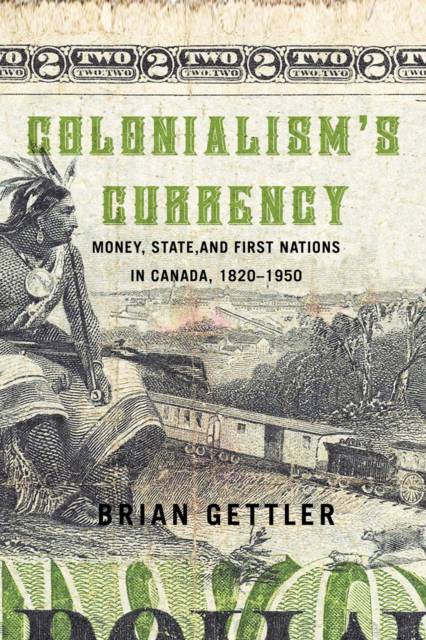
Money, often portrayed as a straightforward representation of market value, is also a political force, a technology for remaking space and population. This was especially true in nineteenth- and twentieth-century Canada, where money - in many forms - provided an effective means of disseminating colonial social values, laying claim to national space, and disciplining colonized peoples.
Colonialism's Currency analyzes the historical experiences and interactions of three distinct First Nations - the Wendat of Wendake, the Innu of Mashteuiatsh, and the Moose Factory Cree - with monetary forms and practices created by colonial powers. Whether treaty payments and welfare provisions such as the paper vouchers favoured by the Department of Indian Affairs, the Canadian Dominion's standardized paper notes, or the "made beaver" (the Hudson's Bay Company's money of account), each monetary form allowed the state to communicate and enforce political, economic, and cultural sovereignty over Indigenous peoples and their lands. Surveying a range of historical cases, Brian Gettler shows how currency simultaneously placed First Nations beyond the bounds of settler society while justifying colonial interventions in their communities. Testifying to the destructive and the legitimizing power of money, Colonialism's Currency is an intriguing exploration of the complex relationship between First Nations and the state.Specificaties
Betrokkenen
- Auteur(s):
- Uitgeverij:
Inhoud
- Aantal bladzijden:
- 336
- Taal:
- Engels
- Reeks:
- Reeksnummer:
- nr. 39
Eigenschappen
- Productcode (EAN):
- 9780228001188
- Verschijningsdatum:
- 16/07/2020
- Uitvoering:
- Paperback
- Formaat:
- Trade paperback (VS)
- Afmetingen:
- 152 mm x 226 mm
- Gewicht:
- 476 g


Alleen bij Standaard Boekhandel
+ 117 punten op je klantenkaart van Standaard Boekhandel
Cadeau

AANGERADEN


Beoordelingen
We publiceren alleen reviews die voldoen aan de voorwaarden voor reviews. Bekijk onze voorwaarden voor reviews.