


- Afhalen na 1 uur in een winkel met voorraad
- Gratis thuislevering in België vanaf € 30
- Ruim aanbod met 7 miljoen producten
- Afhalen na 1 uur in een winkel met voorraad
- Gratis thuislevering in België vanaf € 30
- Ruim aanbod met 7 miljoen producten





Omschrijving
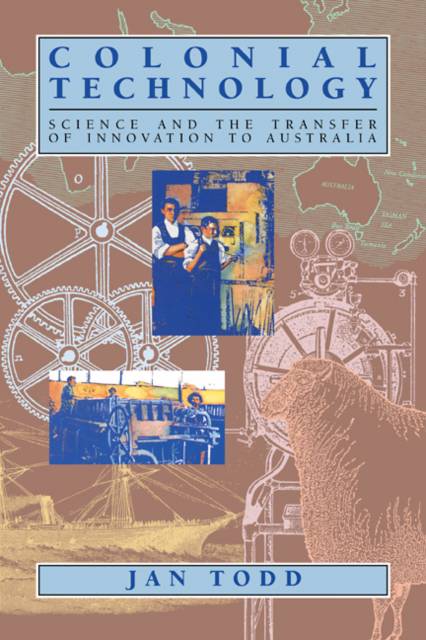
Australia has always imported overseas technology, largely out of necessity, but has this been exploitative, fostering a relationship of dependence, or used to Australia's advantage? Jan Todd explores this question in the context of nineteenth-century science. In her important study, Todd argues that the technology transfer was far more complex than has been widely acknowledged. She shows that technology systems reflect national characteristics, institutions and priorities, drawing general conclusions about Australian science and technology in an imperial context. Much of the book is devoted to two fascinating case studies: the anthrax vaccination for sheep and the cyanide process of gold extraction, both transferred from Europe. In both cases, considering a range of economic, political and cultural factors, she traces a process of creative adaptation to these technologies.
Specificaties
Betrokkenen
- Auteur(s):
- Uitgeverij:
Inhoud
- Aantal bladzijden:
- 316
- Taal:
- Engels
- Reeks:
Eigenschappen
- Productcode (EAN):
- 9780521109840
- Verschijningsdatum:
- 30/04/2009
- Uitvoering:
- Paperback
- Formaat:
- Trade paperback (VS)
- Afmetingen:
- 152 mm x 229 mm
- Gewicht:
- 462 g


Alleen bij Standaard Boekhandel
+ 129 punten op je klantenkaart van Standaard Boekhandel
Cadeau

AANGERADEN


Beoordelingen
We publiceren alleen reviews die voldoen aan de voorwaarden voor reviews. Bekijk onze voorwaarden voor reviews.