


- Afhalen na 1 uur in een winkel met voorraad
- Gratis thuislevering in België vanaf € 30
- Ruim aanbod met 7 miljoen producten
- Afhalen na 1 uur in een winkel met voorraad
- Gratis thuislevering in België vanaf € 30
- Ruim aanbod met 7 miljoen producten





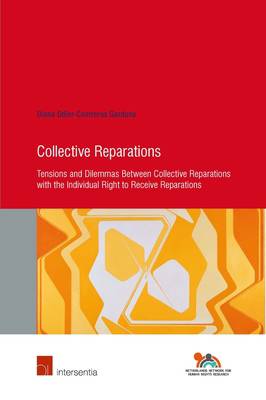
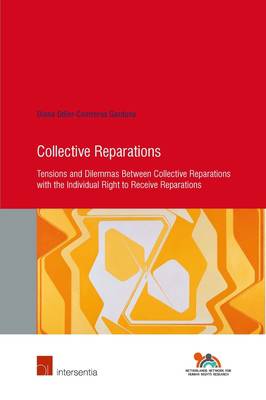
Collective Reparations
Tensions and Dilemmas Between Collective Reparations with the Individual Right to Receive Reparations Volume 84
Diana Odier Contreras-Garduno
€ 107,00
+ 214 punten
Omschrijving
Although international human rights law establishes the individual right to receive reparations, collective reparations have been considered a common response from judicial and non-judicial bodies to reparations for victims of gross violations of human rights. As such, collective reparations have been awarded within the field of international human rights law, international criminal law and transitional justice. Yet the concept, content and scope of collective reparations are rather unspecified. To date, neither the judicial nor the non-judicial bodies that have granted this kind of reparations have ever defined them.This book presents the first study on collective reparations. It aims to shed light on the legal framework, content and scope of collective reparations, and to the relationship between collective reparations and the individual right to reparations. In order to do so, the book analyses specific case law from the Inter-American Court of Human Rights, the International Criminal Court and the Extraordinary Chambers in the Courts of Cambodia. Additionally, the practices of non-judicial mechanisms were examined, specifically those of the Peruvian and Moroccan Truth Commissions and of two mass claims compensation commissions (the United Nations Compensation Commission and the Eritrea-Ethiopia Claims Commission). Finally, it provides an overview of the challenges that collective reparations present to the fields of international human rights law and international criminal law, including in their implementation.
Specificaties
Betrokkenen
- Auteur(s):
- Uitgeverij:
Inhoud
- Aantal bladzijden:
- 426
- Taal:
- Engels
- Reeks:
- Reeksnummer:
- nr. 84
Eigenschappen
- Productcode (EAN):
- 9781780687056
- Verschijningsdatum:
- 28/09/2018
- Uitvoering:
- Paperback
- Formaat:
- Trade paperback (VS)
- Afmetingen:
- 170 mm x 240 mm
- Gewicht:
- 716 g


Alleen bij Standaard Boekhandel
+ 214 punten op je klantenkaart van Standaard Boekhandel
Cadeau

AANGERADEN


Beoordelingen
We publiceren alleen reviews die voldoen aan de voorwaarden voor reviews. Bekijk onze voorwaarden voor reviews.