


- Afhalen na 1 uur in een winkel met voorraad
- Gratis thuislevering in België vanaf € 30
- Ruim aanbod met 7 miljoen producten
- Afhalen na 1 uur in een winkel met voorraad
- Gratis thuislevering in België vanaf € 30
- Ruim aanbod met 7 miljoen producten





€ 99,95
+ 199 punten
Uitvoering
Omschrijving
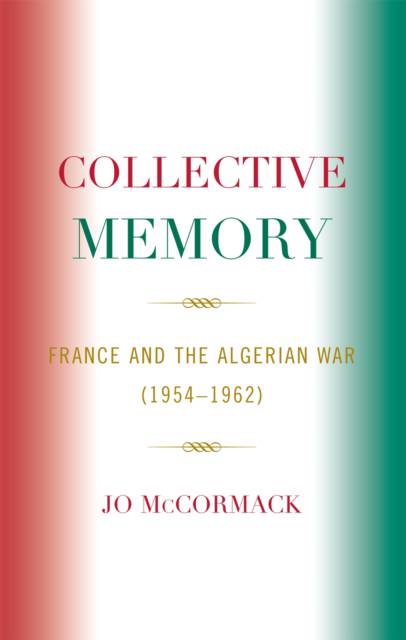
Collective Memory examines the difficult transmission of memory in France of the Algerian war of independence (1954-62). Emphasizing the current lack of transmission of memories of this war through a detailed case study of three crucial vectors of memory: the teaching of school history, coverage in the media, and discussion in the family, author McCormack argues that lack of transmission of memories is feeding into contemporary racism and exclusion in France. Collective Memory draws extensively on interviews with historians, teachers, and pupils as well as secondary sources and media analysis. McCormack proposes that a greater "work of memory" needs to be undertaken if France is to overcome the division in French society that stems from the war. There has been little reconciliation of divisive group memories, a situation that leaves many individuals without a voice on this important subject. "Memory battles" dominate discussion of the topic as many issues periodically flare up and cannot yet be overcome.
Specificaties
Betrokkenen
- Auteur(s):
- Uitgeverij:
Inhoud
- Aantal bladzijden:
- 236
- Taal:
- Engels
- Reeks:
Eigenschappen
- Productcode (EAN):
- 9780739145623
- Verschijningsdatum:
- 16/02/2010
- Uitvoering:
- Paperback
- Formaat:
- Trade paperback (VS)
- Afmetingen:
- 147 mm x 224 mm
- Gewicht:
- 362 g


Alleen bij Standaard Boekhandel
+ 199 punten op je klantenkaart van Standaard Boekhandel
Cadeau

AANGERADEN


Beoordelingen
We publiceren alleen reviews die voldoen aan de voorwaarden voor reviews. Bekijk onze voorwaarden voor reviews.