


- Afhalen na 1 uur in een winkel met voorraad
- Gratis thuislevering in België vanaf € 30
- Ruim aanbod met 7 miljoen producten
- Afhalen na 1 uur in een winkel met voorraad
- Gratis thuislevering in België vanaf € 30
- Ruim aanbod met 7 miljoen producten





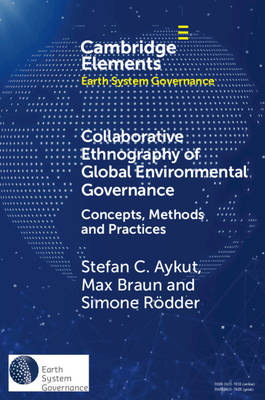
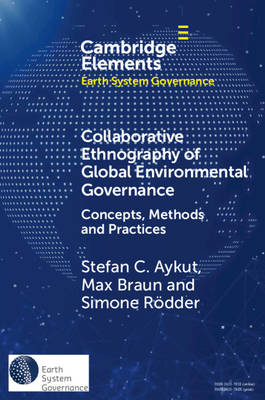
Collaborative Ethnography of Global Environmental Governance
Concepts, Methods and Practices
Stefan C Aykut, Simone Rödder, Max Braun
€ 36,45
+ 72 punten
Omschrijving
Environmental mega conferences have become the format of choice in environmental governance. Conferences of the Parties (COPs) under the climate change and biodiversity conventions in particular attract global media attention and an ever-growing number of increasingly diverse actors, including scholars of global environmental politics. They are arenas for interstate negotiation, but also temporary interfaces that constitute and represent world society, and they focalise global struggles over just and sustainable futures. Collaborative event ethnography (CEE) as a research methodology emerged as a response to these developments. This volume retraces its genealogy, explains its conceptual and methodological foundations and presents insights into its practice. It is meant as an introduction for students, an overview for curious newcomers to the field, and an invitation for experienced researchers wishing to experiment with a new method. This title is also available as Open Access on Cambridge Core.
Specificaties
Betrokkenen
- Auteur(s):
- Uitgeverij:
Inhoud
- Aantal bladzijden:
- 88
- Taal:
- Engels
- Reeks:
Eigenschappen
- Productcode (EAN):
- 9781009387705
- Verschijningsdatum:
- 13/06/2024
- Uitvoering:
- Paperback
- Formaat:
- Trade paperback (VS)
- Afmetingen:
- 152 mm x 229 mm
- Gewicht:
- 127 g


Alleen bij Standaard Boekhandel
+ 72 punten op je klantenkaart van Standaard Boekhandel
Cadeau

AANGERADEN


Beoordelingen
We publiceren alleen reviews die voldoen aan de voorwaarden voor reviews. Bekijk onze voorwaarden voor reviews.