


- Afhalen na 1 uur in een winkel met voorraad
- Gratis thuislevering in België vanaf € 30
- Ruim aanbod met 7 miljoen producten
- Afhalen na 1 uur in een winkel met voorraad
- Gratis thuislevering in België vanaf € 30
- Ruim aanbod met 7 miljoen producten





€ 35,45
+ 70 punten
Omschrijving
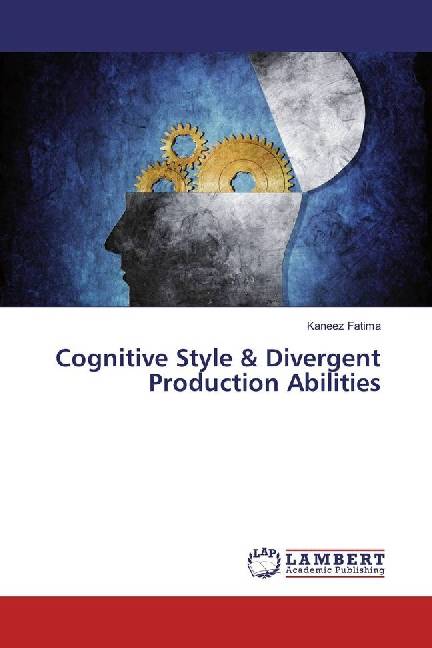
The challenge most frequently offered to educators in recent years is: Why are thousands of children in every corner of country known as under-achievers, slow-learners, behavior problems and drop-outs? An impatient public and a concerned group of educators have espoused literally hundreds of potential solutions from open classrooms to teaching machines, from alternate schools to "back to the basics." The efforts continue to find the key that will make education useful, interesting and within the grasp of its students .The question under investigation in the present study suggests hat for many under-achievers, it is not the case of a child having learning problems but rather a situation where a learning style is in conflict with a teaching style. The resulting frustration for teacher and learner is often mis-diagnosed and an incorrect treatment prescribed, i .e special education approaches for a child whose only "problem" is that his learning style is out of step with the teaching style which is offered .
Specificaties
Betrokkenen
- Auteur(s):
- Uitgeverij:
Inhoud
- Aantal bladzijden:
- 52
- Taal:
- Engels
Eigenschappen
- Productcode (EAN):
- 9783659915581
- Uitvoering:
- Paperback
- Afmetingen:
- 150 mm x 220 mm


Alleen bij Standaard Boekhandel
+ 70 punten op je klantenkaart van Standaard Boekhandel
AANGERADEN


Beoordelingen
We publiceren alleen reviews die voldoen aan de voorwaarden voor reviews. Bekijk onze voorwaarden voor reviews.