


- Afhalen na 1 uur in een winkel met voorraad
- Gratis thuislevering in België vanaf € 30
- Ruim aanbod met 7 miljoen producten
- Afhalen na 1 uur in een winkel met voorraad
- Gratis thuislevering in België vanaf € 30
- Ruim aanbod met 7 miljoen producten





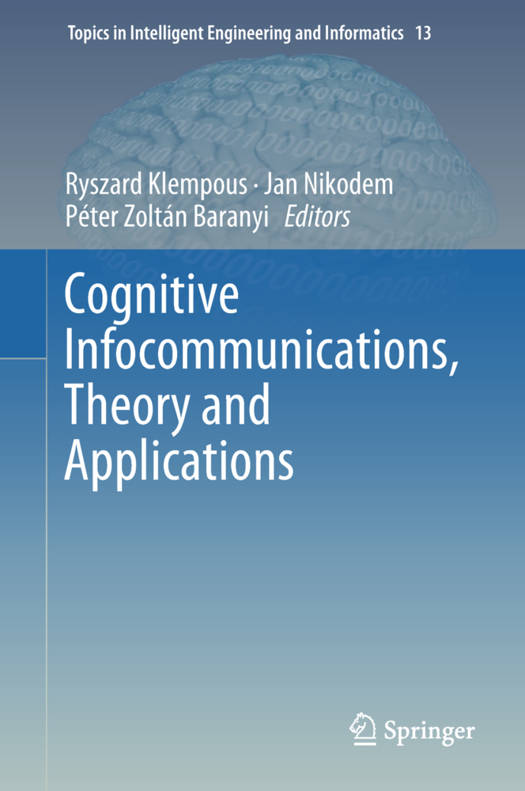
Cognitive Infocommunications, Theory and Applications
€ 108,45
+ 216 punten
Omschrijving
The book gathers the chapters of Cognitive InfoCommunication research relevant to a variety of application areas, including data visualization, emotion expression, brain-computer interfaces or speech technologies. It provides an overview of the kind of cognitive capabilities that are being analyzed and developed. Based on this common ground, it may become possible to see new opportunities for synergy among disciplines that were heretofore viewed as being separate.
Cognitive InfoCommunication begins by modeling human cognitive states and aptitudes in order to better understand what the user of a system is capable of comprehending and doing. The patterns of exploration and the specific tools that are described can certainly be of interest and of great relevance for all researchers who focus on modeling human states and aptitudes.
This innovative research area provides answers to the latest challenges in influence of cognitive states and aptitudes in order to facilitate learning or generally improve performance in certain cognitive tasks such as decision making. Some capabilities are purely human, while others are purely artificial, but in general this distinction is rarely clear-cut. Therefore, when discussing new human cognitive capabilities, the technological background which makes them possible cannot be neglected, and indeed often plays a central role.
This book highlights the synergy between various fields that are perfectly fit under the umbrella of CogInfoCom and contribute to understanding and developing new, human-artificial intelligence hybrid capabilities. These, merged capabilities are currently appearing, and the importance of the role they play in everyday life are unique to the cognitive entity generation that is currently growing up.
Cognitive InfoCommunication begins by modeling human cognitive states and aptitudes in order to better understand what the user of a system is capable of comprehending and doing. The patterns of exploration and the specific tools that are described can certainly be of interest and of great relevance for all researchers who focus on modeling human states and aptitudes.
This innovative research area provides answers to the latest challenges in influence of cognitive states and aptitudes in order to facilitate learning or generally improve performance in certain cognitive tasks such as decision making. Some capabilities are purely human, while others are purely artificial, but in general this distinction is rarely clear-cut. Therefore, when discussing new human cognitive capabilities, the technological background which makes them possible cannot be neglected, and indeed often plays a central role.
This book highlights the synergy between various fields that are perfectly fit under the umbrella of CogInfoCom and contribute to understanding and developing new, human-artificial intelligence hybrid capabilities. These, merged capabilities are currently appearing, and the importance of the role they play in everyday life are unique to the cognitive entity generation that is currently growing up.
Specificaties
Betrokkenen
- Uitgeverij:
Inhoud
- Aantal bladzijden:
- 462
- Taal:
- Engels
- Reeks:
- Reeksnummer:
- nr. 13
Eigenschappen
- Productcode (EAN):
- 9783319959955
- Verschijningsdatum:
- 5/09/2018
- Uitvoering:
- Hardcover
- Formaat:
- Genaaid
- Afmetingen:
- 156 mm x 234 mm
- Gewicht:
- 843 g

Alleen bij Standaard Boekhandel
+ 216 punten op je klantenkaart van Standaard Boekhandel
Cadeau

AANGERADEN


Beoordelingen
We publiceren alleen reviews die voldoen aan de voorwaarden voor reviews. Bekijk onze voorwaarden voor reviews.