


- Afhalen na 1 uur in een winkel met voorraad
- Gratis thuislevering in België vanaf € 30
- Ruim aanbod met 7 miljoen producten
- Afhalen na 1 uur in een winkel met voorraad
- Gratis thuislevering in België vanaf € 30
- Ruim aanbod met 7 miljoen producten





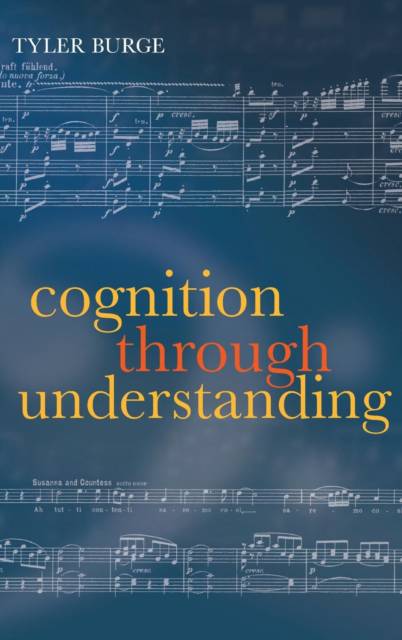
Cognition Through Understanding
Self-Knowledge, Interlocution, Reasoning, Reflection: Philosophical Essays, Volume 3
Tyler Burge
€ 225,95
+ 451 punten
Uitvoering
Omschrijving
Cognition Through Understanding presents a selection of Tyler Burge's essays that use epistemology to illumine powers of mind. The essays focus on epistemic warrants that differ from those warrants commonly discussed in epistemology--those for ordinary empirical beliefs and for logical and mathematical beliefs. The essays center on four types of cognition warranted through understanding--self-knowledge, interlocution, reasoning, and reflection. Burge argues that by reflecting on warrants for these types of cognition, one better understands cognitive powers that are distinctive of persons, and (on earth) of human beings. The collection presents three previously unpublished independent essays, in addition to substantial, retrospective commentary. The retrospective commentary invites the reader to make connections that were not fully in mind when the essays were written.
Specificaties
Betrokkenen
- Auteur(s):
- Uitgeverij:
Inhoud
- Aantal bladzijden:
- 648
- Taal:
- Engels
- Reeks:
Eigenschappen
- Productcode (EAN):
- 9780199672028
- Verschijningsdatum:
- 19/05/2013
- Uitvoering:
- Hardcover
- Formaat:
- Genaaid
- Afmetingen:
- 157 mm x 236 mm
- Gewicht:
- 1111 g


Alleen bij Standaard Boekhandel
+ 451 punten op je klantenkaart van Standaard Boekhandel
Cadeau

AANGERADEN


Beoordelingen
We publiceren alleen reviews die voldoen aan de voorwaarden voor reviews. Bekijk onze voorwaarden voor reviews.