


- Afhalen na 1 uur in een winkel met voorraad
- Gratis thuislevering in België vanaf € 30
- Ruim aanbod met 7 miljoen producten
- Afhalen na 1 uur in een winkel met voorraad
- Gratis thuislevering in België vanaf € 30
- Ruim aanbod met 7 miljoen producten





€ 54,45
+ 108 punten
Omschrijving
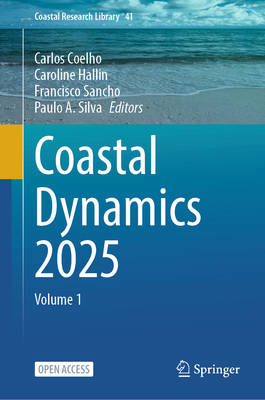
This open-access proceedings of Coastal Dynamics 2025 compile 231 manuscripts of the communications presented at the University of Aveiro, Portugal, between 7th and 11th April 2025. The works are divided in 15 chapters (2 volumes), in accordance with the topic of the sessions where they were presented. The conference theme was "Living with a Dynamic Coast". Most updated research on the dynamics and changes of the coastal systems include field (remote and in-situ) observations, laboratory experiments, theoretical formulations, and numerical simulations. Recent research and applications concerning coastal waves and currents, interactions between wind, water, sediments and eco-systems, and morphology changes in different morphological environments (with and without structures) such as sandy, rocky, and muddy coasts, inlets, and estuaries are described in this compilation. The extended list of highlights coming out of the conference included the following keywords: machine learning algorithms; automatic techniques; neural networks, clustering, random forests, multivariate analysis; extensive time/space datasets; stochastic modelling/simulators; model-data hybrid approaches; climate versus seasonal drivers; dune evolution modelling; long-term trending/forecasting; high-resolution; young researchers; satellite/UAV/LIDAR imagery/data; sediment-vegetation-flow interaction under/above water; multi-disciplinary, across-scales processes; nature-based interventions; new field experiments; digital twins; adaptation pathways; climate change impacts; role of infragravity waves; process-based models; small/remote coastal environments; sea-level rise.
Specificaties
Betrokkenen
- Uitgeverij:
Inhoud
- Aantal bladzijden:
- 828
- Taal:
- Engels
- Reeks:
- Reeksnummer:
- nr. 41
Eigenschappen
- Productcode (EAN):
- 9783032154729
- Verschijningsdatum:
- 5/03/2026
- Uitvoering:
- Hardcover
- Formaat:
- Genaaid
- Afmetingen:
- 156 mm x 234 mm
- Gewicht:
- 1360 g

Alleen bij Standaard Boekhandel
+ 108 punten op je klantenkaart van Standaard Boekhandel
Cadeau

AANGERADEN


Beoordelingen
We publiceren alleen reviews die voldoen aan de voorwaarden voor reviews. Bekijk onze voorwaarden voor reviews.