


- Afhalen na 1 uur in een winkel met voorraad
- Gratis thuislevering in België vanaf € 30
- Ruim aanbod met 7 miljoen producten
- Afhalen na 1 uur in een winkel met voorraad
- Gratis thuislevering in België vanaf € 30
- Ruim aanbod met 7 miljoen producten





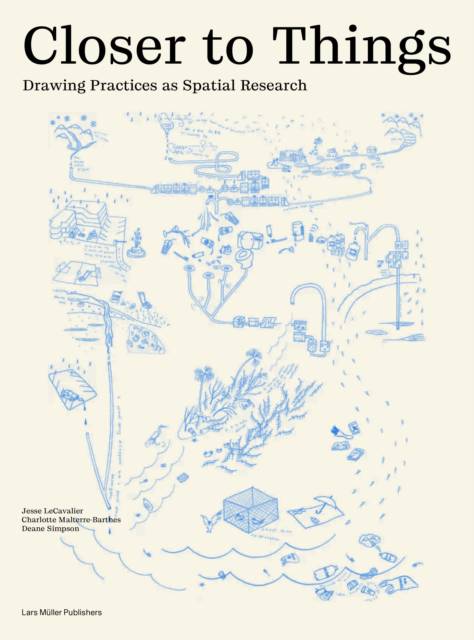
Closer to Things
Drawing Practices as Spatial Research
Jesse LeCavalier, Charlotte Malterre-Barthes, Deane Simpson
Paperback | Engels
€ 49,45
+ 98 punten
Omschrijving
"Closer to Things: Drawing Practices as Spatial Research" examines drawing as a critical research methodology in architecture and the spatial disciplines. Moving beyond drawing's conventional role as a prescriptive design tool, the publication addresses how drawing can be deployed as an analytical instrument to investigate, or get "closer to," urgent matters of concern in the existing built environment. Through this lens, drawing becomes a potent tool to reveal and communicate complex and often obscured spatial conditions of social inequality, economic asymmetries, environmental degradation or climatic crisis. This publication comprises an extended text by the authors interrogating different forms of research agency performed through drawing; a curated archive of relevant historical and contemporary drawings paired with theoretical reflections; and a series of new interviews and conversations on drawing's research agency with practitioners and researchers such as Momoyo Kaijima, Eyal Weizman, Fei Fei Zhou, Laura Kurgan, Huda Tayob and Denise Scott-Brown, amongst others.Relevant reading for researchers, practitioners and students alike, "Closer to Things" frames drawing not just as a creative act, but as a powerful tool of critical spatial inquiry.
Specificaties
Betrokkenen
- Auteur(s):
- Uitgeverij:
Inhoud
- Aantal bladzijden:
- 616
- Taal:
- Engels
Eigenschappen
- Productcode (EAN):
- 9783037787908
- Verschijningsdatum:
- 27/10/2026
- Uitvoering:
- Paperback
- Formaat:
- Trade paperback (VS)
- Afmetingen:
- 171 mm x 241 mm



Alleen bij Standaard Boekhandel
+ 98 punten op je klantenkaart van Standaard Boekhandel
Cadeau

AANGERADEN


Beoordelingen
We publiceren alleen reviews die voldoen aan de voorwaarden voor reviews. Bekijk onze voorwaarden voor reviews.