


- Afhalen na 1 uur in een winkel met voorraad
- Gratis thuislevering in België vanaf € 30
- Ruim aanbod met 7 miljoen producten
- Afhalen na 1 uur in een winkel met voorraad
- Gratis thuislevering in België vanaf € 30
- Ruim aanbod met 7 miljoen producten





€ 53,45
+ 106 punten
Omschrijving
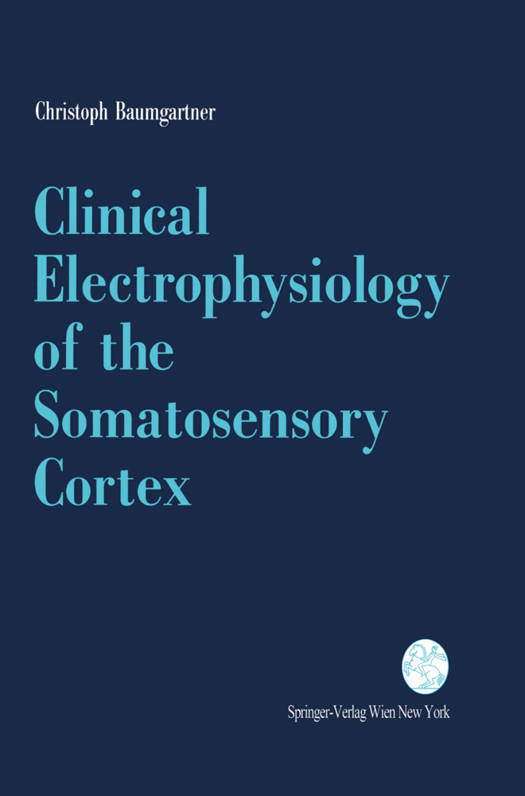
The functional anatomy of human somatosensory cortex is of both scientific and clinical interest. Scientifically, it provides insights in information processing in the human brain. Clinically, it helps to avoid neurological deficits by sparing essential brain regions during neurosurgical procedures adjacent to central fissure. In the present study the functional organization of the human somatosensory cortex was investigated with electrophysiological techniques using a combined approach of cortical stimulations and somatosensory evoked responses on electrocorticography, scalp-EEG, and magnetoencephalography. The spatiotemporal structure of the evoked response was studiedwith biophysical modeling techniqueswhich allowed identification of the three-dimensional intracerebral location, time activity, and interaction of the neuronal sources activated following peripheral somatosensory stimulation. Furthermore, the somatotopic organization ofhand and lip somatosensory cortex was investigated. The relative value of invasive (cortical stimulations and electrocorticography) and non-invasive (scalp-EEGand magnetoencephalography) was assessed. The combined use ofscalp-EEG and magnetoencephalography was useful to increase non-invasive localization accuracy. I want to thank several people who significantly contributed in completion of the present work. Univ. -Prof Dr. Luder Deecke, Chairman of the Neurological University Clinic, Vienna, Austria, supported me throughout my career at the Neurological University Clinic in Vienna since 1985. Dr. William W Sutherling, Associate Professor at the University of California, Los Angeles, who was my advisor during my stay from 1987-1989 at the Department ofNeurology, University of California, Los Angeles where most of the present work was done.
Specificaties
Betrokkenen
- Auteur(s):
- Uitgeverij:
Inhoud
- Aantal bladzijden:
- 198
- Taal:
- Engels
Eigenschappen
- Productcode (EAN):
- 9783211823910
- Verschijningsdatum:
- 15/01/1993
- Eerder verschenen als:
- Uitvoering:
- Paperback
- Formaat:
- Trade paperback (VS)
- Afmetingen:
- 156 mm x 234 mm
- Gewicht:
- 303 g


Alleen bij Standaard Boekhandel
+ 106 punten op je klantenkaart van Standaard Boekhandel
Cadeau

AANGERADEN


Beoordelingen
We publiceren alleen reviews die voldoen aan de voorwaarden voor reviews. Bekijk onze voorwaarden voor reviews.