


- Afhalen na 1 uur in een winkel met voorraad
- Gratis thuislevering in België vanaf € 30
- Ruim aanbod met 7 miljoen producten
- Afhalen na 1 uur in een winkel met voorraad
- Gratis thuislevering in België vanaf € 30
- Ruim aanbod met 7 miljoen producten





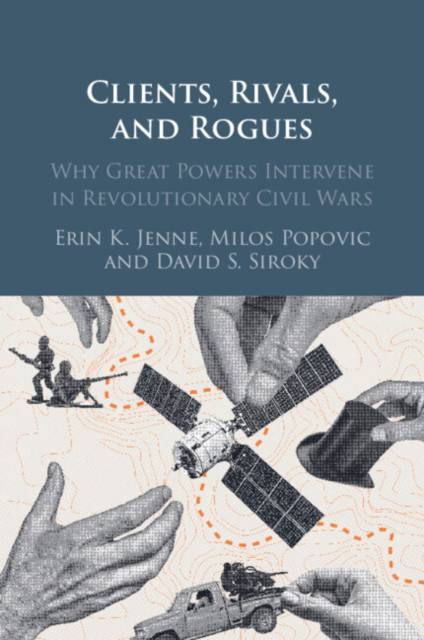
Clients, Rivals, and Rogues
Why Great Powers Intervene in Revolutionary Civil Wars
Erin K Jenne, Milos Popovic, David S Siroky
Paperback | Engels
€ 64,95
+ 129 punten
Uitvoering
Omschrijving
Why do great powers intervene militarily in revolutionary civil wars? This pivotal question in international relations is answered though a new theory of security hierarchies that emphasizes the role of clients, rivals and rogues in world politics. Employing a mixed-methods approach, integrating statistical analysis with comprehensive case studies of Afghanistan, Libya, and Syria, this book demonstrates that great power interventions are significantly more constrained and predictable than previously assumed. Role theory and frame analysis further exhibit how the status of other states within a great power's security hierarchy influences interventions. The findings provide a lucid account of great power behavior, offering critical insights for scholars and policymakers interested in the international dimensions of intrastate conflicts. Clients, Rivals and Rogues shows that the strategies that underpin great power interventions and provides crucial lessons for the management of regime conflicts, one of the most common and deadly forms of political instability today.
Specificaties
Betrokkenen
- Auteur(s):
- Uitgeverij:
Inhoud
- Aantal bladzijden:
- 306
- Taal:
- Engels
Eigenschappen
- Productcode (EAN):
- 9781009560542
- Verschijningsdatum:
- 19/02/2026
- Uitvoering:
- Paperback
- Formaat:
- Trade paperback (VS)
- Afmetingen:
- 152 mm x 229 mm
- Gewicht:
- 449 g



Alleen bij Standaard Boekhandel
+ 129 punten op je klantenkaart van Standaard Boekhandel
Cadeau

AANGERADEN


Beoordelingen
We publiceren alleen reviews die voldoen aan de voorwaarden voor reviews. Bekijk onze voorwaarden voor reviews.