



- Afhalen na 1 uur in een winkel met voorraad
- In januari gratis thuislevering in België
- Ruim aanbod met 7 miljoen producten
- Afhalen na 1 uur in een winkel met voorraad
- In januari gratis thuislevering in België
- Ruim aanbod met 7 miljoen producten





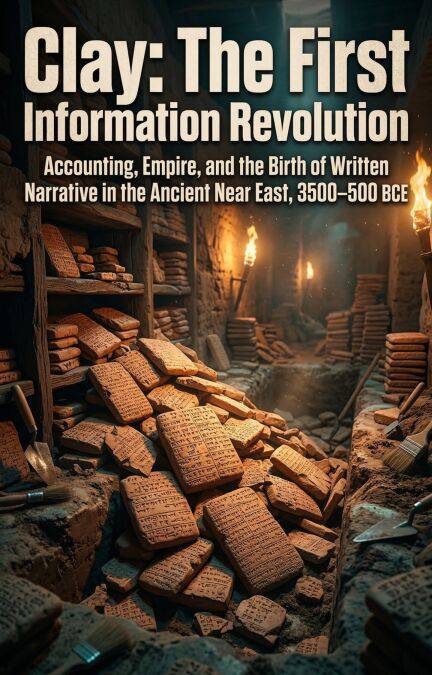
Clay: The First Information Revolution E-BOOK
Accounting, Empire, and the Birth of Written Narrative in the Ancient Near East, 3500–500 BCE
Alistair Finch
E-book | Engels
€ 19,99
+ 19 punten
Omschrijving
"Clay: The First Information Revolution" challenges the conventional narrative of the origin of writing, positioning the humble clay tablet as the catalyst for the world's first true information revolution. Far from starting with poetry or law, the first scripts were utilitarian tools for accounting—tracking barley rations and sheep hocks. This book uncovers the hidden mechanics of how a system of tokens transformed into complex cuneiform, enabling the administration of the first empires.
The reader will explore the forgotten archives of Mesopotamia, where scribes developed the first data management systems. We discover how this need for precise record-keeping laid the groundwork for literature, from legal codes like Hammurabi's to the Epic of Gilgamesh. The text reveals the socio-political impact of literacy, the power dynamics of the scribal class, and the resilience of a medium that has outlasted all digital formats.
"Clay" is a meticulous exploration of how a simple material shaped human thought and organization. It offers academics and historians a fresh perspective on the materiality of communication, arguing that the true digital revolution began not with the silicon chip, but with the first stylus pressed into wet clay.
The reader will explore the forgotten archives of Mesopotamia, where scribes developed the first data management systems. We discover how this need for precise record-keeping laid the groundwork for literature, from legal codes like Hammurabi's to the Epic of Gilgamesh. The text reveals the socio-political impact of literacy, the power dynamics of the scribal class, and the resilience of a medium that has outlasted all digital formats.
"Clay" is a meticulous exploration of how a simple material shaped human thought and organization. It offers academics and historians a fresh perspective on the materiality of communication, arguing that the true digital revolution began not with the silicon chip, but with the first stylus pressed into wet clay.
Specificaties
Betrokkenen
- Auteur(s):
- Uitgeverij:
Inhoud
- Aantal bladzijden:
- 218
- Taal:
- Engels
Eigenschappen
- Productcode (EAN):
- 9783565335404
- Verschijningsdatum:
- 17/03/2026
- Uitvoering:
- E-book
- Formaat:
- ePub


Alleen bij Standaard Boekhandel
+ 19 punten op je klantenkaart van Standaard Boekhandel
Cadeau

AANGERADEN


Beoordelingen
We publiceren alleen reviews die voldoen aan de voorwaarden voor reviews. Bekijk onze voorwaarden voor reviews.