


- Afhalen na 1 uur in een winkel met voorraad
- Gratis thuislevering in België vanaf € 30
- Ruim aanbod met 7 miljoen producten
- Afhalen na 1 uur in een winkel met voorraad
- Gratis thuislevering in België vanaf € 30
- Ruim aanbod met 7 miljoen producten





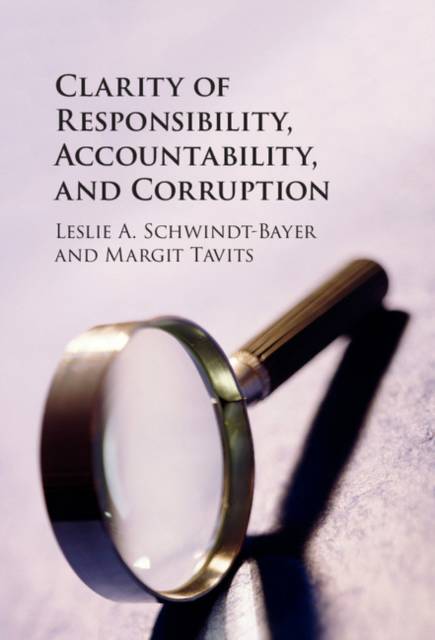
Clarity of Responsibility, Accountability, and Corruption
Leslie A Schwindt-Bayer, Margit Tavits
Paperback | Engels
€ 67,95
+ 135 punten
Uitvoering
Omschrijving
Corruption is a significant problem for democracies throughout the world. Even the most democratic countries constantly face the threat of corruption and the consequences of it at the polls. Why are some governments more corrupt than others, even after considering cultural, social, and political characteristics? In Clarity of Responsibility, Accountability, and Corruption, the authors argue that clarity of responsibility is critical for reducing corruption in democracies. The authors provide a number of empirical tests of this argument, including a cross-national time-series statistical analysis to show that the higher the level of clarity the lower the perceived corruption levels. Using survey and experimental data, the authors show that clarity causes voters to punish incumbents for corruption. Preliminary tests further indicate that elites respond to these electoral incentives and are more likely to combat corruption when clarity is high.
Specificaties
Betrokkenen
- Auteur(s):
- Uitgeverij:
Inhoud
- Aantal bladzijden:
- 218
- Taal:
- Engels
Eigenschappen
- Productcode (EAN):
- 9781107566927
- Verschijningsdatum:
- 25/05/2017
- Uitvoering:
- Paperback
- Formaat:
- Trade paperback (VS)
- Afmetingen:
- 152 mm x 229 mm
- Gewicht:
- 326 g



Alleen bij Standaard Boekhandel
+ 135 punten op je klantenkaart van Standaard Boekhandel
Cadeau

AANGERADEN


Beoordelingen
We publiceren alleen reviews die voldoen aan de voorwaarden voor reviews. Bekijk onze voorwaarden voor reviews.