


- Afhalen na 1 uur in een winkel met voorraad
- Gratis thuislevering in België vanaf € 30
- Ruim aanbod met 7 miljoen producten
- Afhalen na 1 uur in een winkel met voorraad
- Gratis thuislevering in België vanaf € 30
- Ruim aanbod met 7 miljoen producten





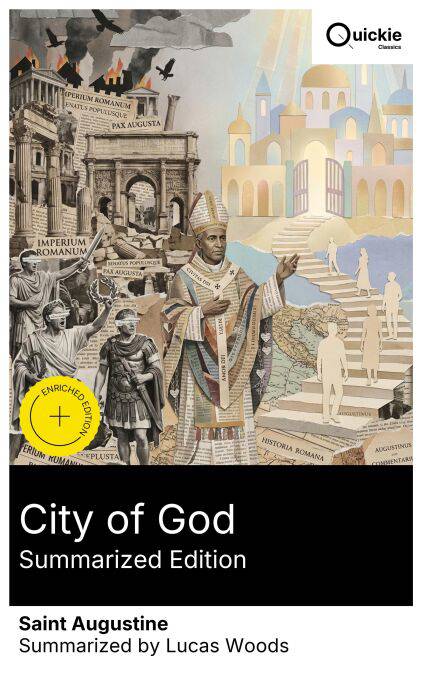
City of God (Summarized Edition) E-BOOK
Enriched edition. Christian philosophy and theology in the 5th-century Roman Empire: original sin, free will, and divine omniscience in Western thought
Saint Augustine
E-book | Engels
€ 0,49
Omschrijving
City of God, in twenty-two books, answers pagan indictments after the sack of Rome and builds a theology of history. Augustine opposes the earthly city, driven by libido dominandi, to the City of God, ordered by charity. Blending Scripture, Roman historiography, and Platonizing philosophy, he critiques civil religion and divination, treats providence and freedom, and narrates creation to consummation in a style at once polemical, pastoral, and encyclopedic. Augustine, bishop of Hippo in North Africa, brought the craft of a former rhetor, the conscience of a convert, and the learning of a reader of Cicero and Plotinus. Written between 413 and 426 and addressed in part to the official Marcellinus, the treatise arose from pastoral necessity: to steady a shaken Roman elite, answer pagan critics, and clarify for Christians the mixed condition of the saeculum. Students of theology, philosophy, and political thought will find a bracing account of the limits of politics and the ordering of loves. City of God rewards patient study for its diagnosis of idolatry, its account of virtue under grace, and its eschatological hope, an indispensable guide beyond the illusions of empire.
Quickie Classics summarizes timeless works with precision, preserving the author's voice and keeping the prose clear, fast, and readable—distilled, never diluted. Enriched Edition extras: Introduction · Synopsis · Historical Context · Author Biography · Brief Analysis · 4 Reflection Q&As · Editorial Footnotes.
Quickie Classics summarizes timeless works with precision, preserving the author's voice and keeping the prose clear, fast, and readable—distilled, never diluted. Enriched Edition extras: Introduction · Synopsis · Historical Context · Author Biography · Brief Analysis · 4 Reflection Q&As · Editorial Footnotes.
Specificaties
Betrokkenen
- Auteur(s):
- Vertaler(s):
- Uitgeverij:
Inhoud
- Aantal bladzijden:
- 355
- Taal:
- Engels
Eigenschappen
- Productcode (EAN):
- 8596547880479
- Verschijningsdatum:
- 9/01/2026
- Uitvoering:
- E-book
- Beveiligd met:
- Digital watermarking
- Formaat:
- ePub


Alleen bij Standaard Boekhandel
Cadeau

AANGERADEN


Beoordelingen
We publiceren alleen reviews die voldoen aan de voorwaarden voor reviews. Bekijk onze voorwaarden voor reviews.