


- Afhalen na 1 uur in een winkel met voorraad
- Gratis thuislevering in België vanaf € 30
- Ruim aanbod met 7 miljoen producten
- Afhalen na 1 uur in een winkel met voorraad
- Gratis thuislevering in België vanaf € 30
- Ruim aanbod met 7 miljoen producten





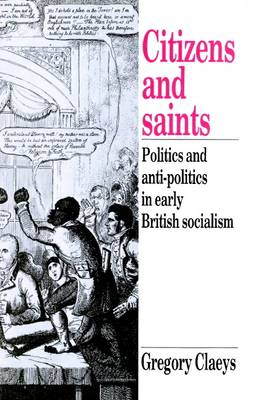
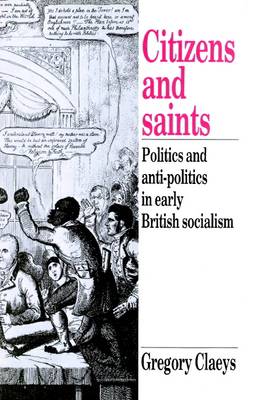
Citizens and Saints
Politics and Anti-Politics in Early British Socialism
Gregory Claeys
Paperback | Engels
€ 76,45
+ 152 punten
Omschrijving
Citizens and Saints is a comprehensive study of the profound rupture in the language of reform and revolution which occurred with the rise of socialism. Focusing upon British Owenite socialism, Professor Claeys argues that two schools of political thinking emerged from the 'social' critique of contemporary political radicalism. One, largely identified with Owenite perfectibilism, aimed to transcend existing forms of democracy and to establish more harmonious, less divisive forms of rule. The other, apparently more democratic, aimed to extend popular control of political institutions to economic organisations. Both were sceptical of the 'political' analyses of socioeconomic deprivation proferred by existing radicalism. Such scepticism was to prove crucial to both liberal and socialist political thought, and Professor Claeys shows that such perennial questions as the intrinsically democratic (or otherwise) nature of Marxist socialism can only be understood by reference to the political and intellectual circumstances in which early socialist ideas emerged.
Specificaties
Betrokkenen
- Auteur(s):
- Uitgeverij:
Inhoud
- Aantal bladzijden:
- 380
- Taal:
- Engels
Eigenschappen
- Productcode (EAN):
- 9780521892766
- Verschijningsdatum:
- 2/05/2002
- Uitvoering:
- Paperback
- Formaat:
- Trade paperback (VS)
- Afmetingen:
- 155 mm x 229 mm
- Gewicht:
- 566 g


Alleen bij Standaard Boekhandel
+ 152 punten op je klantenkaart van Standaard Boekhandel
Cadeau

AANGERADEN


Beoordelingen
We publiceren alleen reviews die voldoen aan de voorwaarden voor reviews. Bekijk onze voorwaarden voor reviews.