


- Afhalen na 1 uur in een winkel met voorraad
- Gratis thuislevering in België vanaf € 30
- Ruim aanbod met 7 miljoen producten
- Afhalen na 1 uur in een winkel met voorraad
- Gratis thuislevering in België vanaf € 30
- Ruim aanbod met 7 miljoen producten





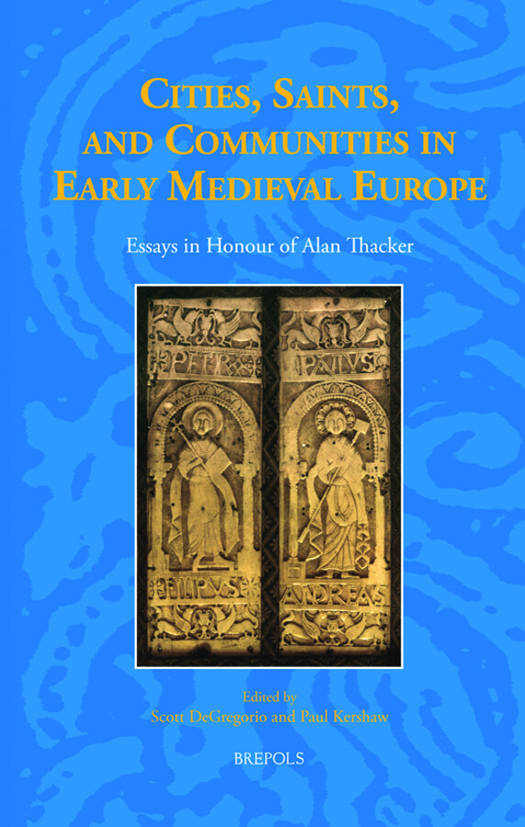
Cities, Saints, and Communities in Early Medieval Europe
Essays in Honour of Alan Thacker
Scott DeGregorio
€ 111,30
+ 222 punten
Omschrijving
This book honours the scholarship of English historian Dr. Alan Thacker by exploring the insular, the European and, more broadly, the Mediterranean connections and contexts of the history and culture of Anglo-Saxon England in the age of Bede, and beyond. It brings together original contributions by leading European and North American scholars of Late Antiquity and the early Middle Ages working across a range of disciplines: history, theology, epigraphy, and art history. Moving from the Irish Sea to the Bosporus, this collection presents a linked world in which saints, scholars, and the city of Rome all played powerful connective roles, creating communities, generating relationships, linking east to west, north to south, and present to past. As in Thacker's own work, Bede's life and thought is a central presence. Bede's attitudes to historical and contemporaneous conceptions of heresy, to the Irish church, and the evidence for his often complex relationships with his Northumbrian contemporaries all come under scrutiny, together with groundbreaking studies of his exegesis, christology, and historical method. Many of the contributions offer original insights into figures and phenomena that have been the focus of Dr. Thacker's highly influential scholarship.
Specificaties
Betrokkenen
- Auteur(s):
- Uitgeverij:
Inhoud
- Aantal bladzijden:
- 408
- Taal:
- Engels
- Reeks:
- Reeksnummer:
- nr. 46
Eigenschappen
- Productcode (EAN):
- 9782503565040
- Verschijningsdatum:
- 1/10/2020
- Uitvoering:
- Hardcover
- Formaat:
- Genaaid
- Afmetingen:
- 165 mm x 239 mm
- Gewicht:
- 816 g



Alleen bij Standaard Boekhandel
+ 222 punten op je klantenkaart van Standaard Boekhandel
Cadeau

AANGERADEN


Beoordelingen
We publiceren alleen reviews die voldoen aan de voorwaarden voor reviews. Bekijk onze voorwaarden voor reviews.