


- Afhalen na 1 uur in een winkel met voorraad
- Gratis thuislevering in België vanaf € 30
- Ruim aanbod met 7 miljoen producten
- Afhalen na 1 uur in een winkel met voorraad
- Gratis thuislevering in België vanaf € 30
- Ruim aanbod met 7 miljoen producten





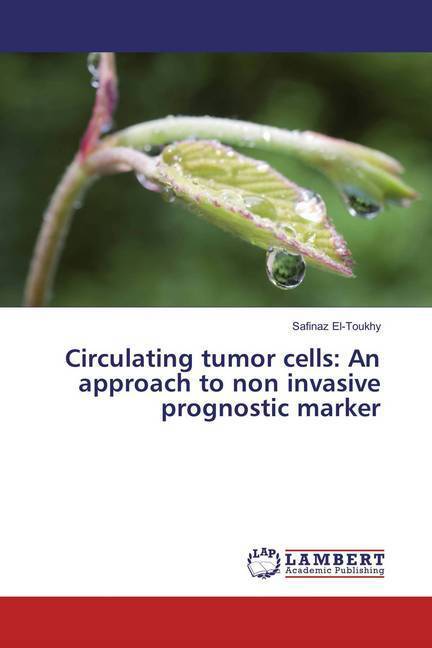
Circulating tumor cells: An approach to non invasive prognostic marker
Safinaz El-Toukhy
Paperback | Engels
€ 39,45
+ 78 punten
Omschrijving
Solid cancers are a leading cause of morbidity and mortality worldwide, primarily due to the failure of effective clinical detection and treatment of metastatic disease in distant sites. CTCs are exceedingly rare cells found in the whole blood cancer patients, they have the potential to serve as a 'blood biopsy' enabling population - wide screening for early diagnosis, high sensitive prognostic monitoring for cancer patients and serial non-invasive molecular profiling to bring the science of personalized medicine to practical completion in the clinic. The presence of CTCs in the bloodstream fits very well with the ''seed and soil" theory of metastasis formation: tumour cells enter the blood circulation after detaching from the primary tumour and can migrate to reach distant organs, where they can implant themselves and give rise to metastasis. Though metastatic spread represents the ultimate cause of death, the release of tumour cells may happen also at early stages of the disease: about 30-40% of patients, thought to have a localised disease, may in fact present occult metastasis, probably derived from CTCs, which will be responsible for the disease progression.
Specificaties
Betrokkenen
- Auteur(s):
- Uitgeverij:
Inhoud
- Aantal bladzijden:
- 72
- Taal:
- Engels
Eigenschappen
- Productcode (EAN):
- 9783659832581
- Uitvoering:
- Paperback
- Afmetingen:
- 150 mm x 220 mm


Alleen bij Standaard Boekhandel
+ 78 punten op je klantenkaart van Standaard Boekhandel

Beoordelingen
We publiceren alleen reviews die voldoen aan de voorwaarden voor reviews. Bekijk onze voorwaarden voor reviews.