


- Afhalen na 1 uur in een winkel met voorraad
- Gratis thuislevering in België vanaf € 30
- Ruim aanbod met 7 miljoen producten
- Afhalen na 1 uur in een winkel met voorraad
- Gratis thuislevering in België vanaf € 30
- Ruim aanbod met 7 miljoen producten





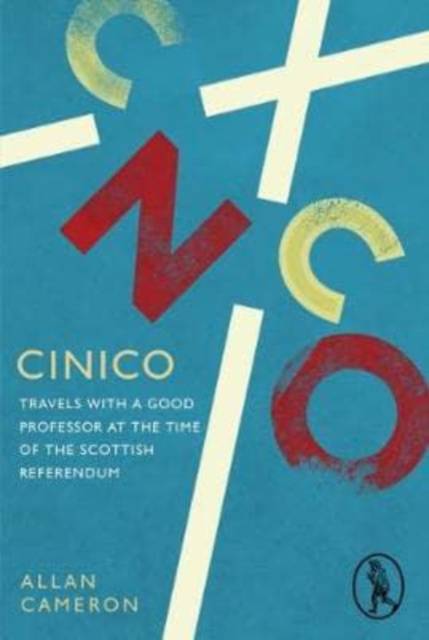
Cinico
Travels with a Good Professor at the Time of the Scottish Referendum
Allan Cameron
Paperback | Engels
€ 18,95
+ 37 punten
Omschrijving
With a Scottish professor of politics as his guide, a London-based Italian journalist traverses Scotland seeking a "big story" on the independence referendum. What he gets instead are small stories from myriad points of view: a Ukrainian nationalist, a Russian religious guru, an eccentric Estonian, an Algerian and a dying man, amongst many others. After a chaotic romance with a Scottish campaigner, the journalist, aptly named Cinico de Oblivii, leaves his post in London for Greece, where, reflecting on his time in Scotland, he writes a memoir (this book). In which, we encounter the full spectrum of ideas on Scottish independence, including the ones Cinico's editor didn't want to publish. Cinico's stories examine how Europeans interpret each other and, more generally, how people relate. Like Candide, Cinico starts with the dominant mindset of his era, which is incapable of bringing him either understanding or contentment, but ends up with an awareness that, though insufficient for the elusive happiness we all seek, is sufficient enough for a perfectly acceptable human existence. "This self-described "rant" has some persuasive elements, especially in Cameron's discussion of the chances that Gaelic will survive in Scotland and his encouragement to raise children to be multilingual."-Library Journal.
Specificaties
Betrokkenen
- Auteur(s):
- Uitgeverij:
Inhoud
- Aantal bladzijden:
- 192
- Taal:
- Engels
Eigenschappen
- Productcode (EAN):
- 9781908251824
- Verschijningsdatum:
- 3/07/2018
- Uitvoering:
- Paperback
- Formaat:
- Trade paperback (VS)
- Afmetingen:
- 137 mm x 208 mm
- Gewicht:
- 158 g


Alleen bij Standaard Boekhandel
+ 37 punten op je klantenkaart van Standaard Boekhandel
Cadeau

AANGERADEN


Beoordelingen
We publiceren alleen reviews die voldoen aan de voorwaarden voor reviews. Bekijk onze voorwaarden voor reviews.