


- Afhalen na 1 uur in een winkel met voorraad
- Gratis thuislevering in België vanaf € 30
- Ruim aanbod met 7 miljoen producten
- Afhalen na 1 uur in een winkel met voorraad
- Gratis thuislevering in België vanaf € 30
- Ruim aanbod met 7 miljoen producten





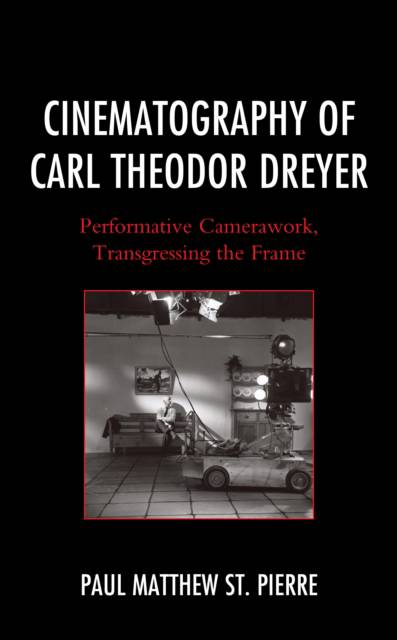
Cinematography of Carl Theodor Dreyer
Performative Camerawork, Transgressing the Frame
Paul Matthew St Pierre
€ 84,95
+ 169 punten
Uitvoering
Omschrijving
Legendary Danish filmmaker Carl Theodor Dreyer (3 February 1889-20 March 1968) was born in Copenhagen to a single mother, Josefine Bernhardine Nilsson, a Swede. His Danish father, Jens Christian Torp, a married farmer, employed Nilsson as a housekeeper. After spending his first two years in orphanages, Dreyer was adopted by Carl Theodor Dreyer, a typographer, and his wife, Inger Marie Dreyer. He was given his adoptive father's name. At age 16, he renounced his adoptive parents and worked his way into the film industry as a journalist, title card writer, screenwriter, and director. Throughout his career he concealed his birth name and the details of his upbringing and his adult private life, which included a period in which he explored his homosexual orientation and endured a nervous breakdown. Despite his relatively small output of fourteen feature films and seven documentary short films, 1919-64, he is considered one of the greatest filmmakers in history because of the diversity of his subjects, themes, techniques, and styles, and the originality of the bold visual grammar he mastered. In Cinematography of Carl Theodor Dreyer: Performative Camerawork, Transgressing the Frame, I argue: 1) that Dreyer, an anonymous orphan, an unsourced subject, manufactured his individuality through filmmaking, self-identifying by shrouding himself in the skin of film, and 2) that, as a screenwriter-director who blocked entire feature films in his imagination in advance--sets, lighting, photography, shot breakdowns, editing--and imposed his vision on camera operators, lighting directors, actors, and crews in production, he saw filmmaking essentially as camerawork and he directed in the style of a performative cinematographer.
Specificaties
Betrokkenen
- Auteur(s):
- Uitgeverij:
Inhoud
- Aantal bladzijden:
- 310
- Taal:
- Engels
- Reeks:
Eigenschappen
- Productcode (EAN):
- 9781683931027
- Verschijningsdatum:
- 6/07/2021
- Uitvoering:
- Paperback
- Formaat:
- Trade paperback (VS)
- Afmetingen:
- 152 mm x 229 mm
- Gewicht:
- 458 g


Alleen bij Standaard Boekhandel
+ 169 punten op je klantenkaart van Standaard Boekhandel
Cadeau

AANGERADEN


Beoordelingen
We publiceren alleen reviews die voldoen aan de voorwaarden voor reviews. Bekijk onze voorwaarden voor reviews.