


- Afhalen na 1 uur in een winkel met voorraad
- Gratis thuislevering in België vanaf € 30
- Ruim aanbod met 7 miljoen producten
- Afhalen na 1 uur in een winkel met voorraad
- Gratis thuislevering in België vanaf € 30
- Ruim aanbod met 7 miljoen producten





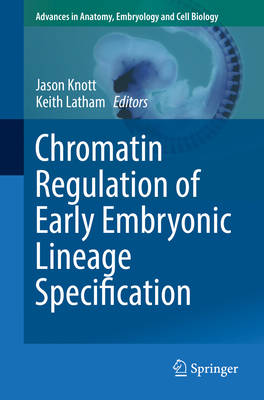
Chromatin Regulation of Early Embryonic Lineage Specification
€ 139,95
+ 279 punten
Omschrijving
Five leaders in the field of mammalian preimplantation embryo development provide their own perspectives on key molecular and cellular processes that mediate lineage formation during the first week of life. The first cell-fate decision involves the formation of the pluripotent inner cell mass (ICM) and extraembryonic trophectoderm (TE). The second cell-fate choice encompasses the transformation of ICM into extraembryonic primitive endoderm (PE) and pluripotent epiblast. The processes, which occur during the period of preimplantation development, serve as the foundation for subsequent developmental events such as implantation, placentation, and gastrulation. The mechanisms that regulate them are complex and involve many different factors operating spatially and temporally over several days to modulate embryonic chromatin structure, impose cellular polarity, and direct distinct gene expression programs in the first cell lineages.
Specificaties
Betrokkenen
- Uitgeverij:
Inhoud
- Aantal bladzijden:
- 78
- Taal:
- Engels
- Reeks:
- Reeksnummer:
- nr. 229
Eigenschappen
- Productcode (EAN):
- 9783319631868
- Verschijningsdatum:
- 8/12/2017
- Uitvoering:
- Paperback
- Afmetingen:
- 128 mm x 232 mm
- Gewicht:
- 150 g

Alleen bij Standaard Boekhandel
+ 279 punten op je klantenkaart van Standaard Boekhandel
AANGERADEN


Beoordelingen
We publiceren alleen reviews die voldoen aan de voorwaarden voor reviews. Bekijk onze voorwaarden voor reviews.