


- Afhalen na 1 uur in een winkel met voorraad
- Gratis thuislevering in België vanaf € 30
- Ruim aanbod met 7 miljoen producten
- Afhalen na 1 uur in een winkel met voorraad
- Gratis thuislevering in België vanaf € 30
- Ruim aanbod met 7 miljoen producten





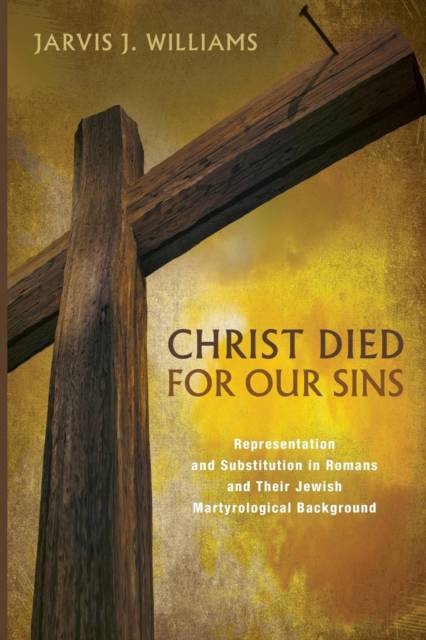
Christ Died for Our Sins
Representation and Substitution in Romans and Their Jewish Martyrological Background
Jarvis J Williams
Paperback | Engels
€ 46,45
+ 92 punten
Omschrijving
In Christ Died for Our Sins, Jarvis J. Williams argues a twofold thesis: First, that Paul in Romans presents Jesus' death as both a representation of, and a substitute for, Jews and Gentiles. Second, that the Jewish martyrological narratives in certain Second Temple Jewish texts are a background behind Paul's presentation of Jesus' death. By means of careful textual analysis, Williams argues that the Jewish martyrological narratives appropriated and applied Levitical cultic language and Isaianic language to the deaths of the Torah-observant Jewish martyrs in order to present their deaths as a representation, a substitution, and as Israel's Yom Kippur for non-Torah-observant Jews. Williams seeks to show that Paul appropriated and applied this same language and conceptuality in order to present Jesus' death as the death of a Torah-observant Jew serving as a representation, a substitution, and as the Yom Kippur for both Jews and Gentiles. Scholars working in the areas of Romans, Pauline theology, Second Temple Judaism, atonement in Paul, or early Christian origins will find much to stimulate and provoke in these pages.
Specificaties
Betrokkenen
- Auteur(s):
- Uitgeverij:
Inhoud
- Aantal bladzijden:
- 246
- Taal:
- Engels
Eigenschappen
- Productcode (EAN):
- 9781608994366
- Verschijningsdatum:
- 18/05/2015
- Uitvoering:
- Paperback
- Formaat:
- Trade paperback (VS)
- Afmetingen:
- 152 mm x 226 mm
- Gewicht:
- 340 g



Alleen bij Standaard Boekhandel
+ 92 punten op je klantenkaart van Standaard Boekhandel
Cadeau

AANGERADEN


Beoordelingen
We publiceren alleen reviews die voldoen aan de voorwaarden voor reviews. Bekijk onze voorwaarden voor reviews.