


- Afhalen na 1 uur in een winkel met voorraad
- Gratis thuislevering in België vanaf € 30
- Ruim aanbod met 7 miljoen producten
- Afhalen na 1 uur in een winkel met voorraad
- Gratis thuislevering in België vanaf € 30
- Ruim aanbod met 7 miljoen producten





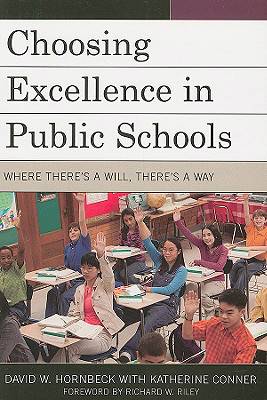
Choosing Excellence in Public Schools
Where There's a Will, There's a Way
David W Hornbeck, Katherine Conner
€ 127,45
+ 254 punten
Uitvoering
Omschrijving
Choosing Excellence in Public Schools explains the origins of the low expectations we have of children, including, notably, children of color, those for whom English is a second language, poor children and children with disabilities. The book dispels the basis for low expectations. It makes clear the economic, demographic, civic, personal and moral imperative to educate all children to high standards and the consequences of not doing so. Hornbeck and Conner set forth a comprehensive, radical agenda based on proven practices and practical experience that will result in education success for virtually all children where faithfully implemented. This book breaks new ground. It establishes that the missing ingredient in school reform is the absence of values-driven, focused, well-financed, professionally staffed, technologically sophisticated grassroots expression of the public will insisting that the political, media, business, judicial and organized labor institutions that make the choices that result in our children's learning conditions make different, and effective choices. We get the education for our own children and grandchildren and those of others that we tolerate or demand.
Specificaties
Betrokkenen
- Auteur(s):
- Uitgeverij:
Inhoud
- Aantal bladzijden:
- 300
- Taal:
- Engels
- Reeks:
Eigenschappen
- Productcode (EAN):
- 9781607091554
- Verschijningsdatum:
- 15/06/2009
- Uitvoering:
- Paperback
- Formaat:
- Trade paperback (VS)
- Afmetingen:
- 152 mm x 226 mm
- Gewicht:
- 544 g


Alleen bij Standaard Boekhandel
+ 254 punten op je klantenkaart van Standaard Boekhandel
AANGERADEN


Beoordelingen
We publiceren alleen reviews die voldoen aan de voorwaarden voor reviews. Bekijk onze voorwaarden voor reviews.