


- Afhalen na 1 uur in een winkel met voorraad
- Gratis thuislevering in België vanaf € 30
- Ruim aanbod met 7 miljoen producten
- Afhalen na 1 uur in een winkel met voorraad
- Gratis thuislevering in België vanaf € 30
- Ruim aanbod met 7 miljoen producten





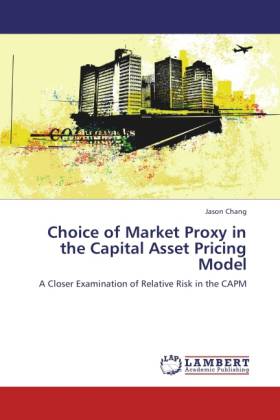
Choice of Market Proxy in the Capital Asset Pricing Model
A Closer Examination of Relative Risk in the CAPM
Jason Chang
Paperback | Engels
€ 48,45
+ 96 punten
Omschrijving
One of the most popular and widely accepted financial valuation models is the Capital Asset Pricing Model (CAPM). This model intuitively takes relative risk into pricing a financial asset. Since Sharpe first developed the CAPM in 1964, the return on the Standard and Poor s 500 (S&P 500) market index has been used as the proxy for the market return. This proxy has not been updated to reflect the globalization of finance and the growth of global stock markets relative to domestic markets. The market proxy is one of the most important factors, if not the most important factor in measuring relative risk. This book examines a potentially more appropriate global index, the Standard and Poor s Global 1200. Although the S&P 500 captures globalization to a certain extent due to the global nature of the domestic companies included in the index, the S&P Global 1200 index is a broader global index and may now be more suitable given the increased globalization the world economy has experienced in recent decades.
Specificaties
Betrokkenen
- Auteur(s):
- Uitgeverij:
Inhoud
- Aantal bladzijden:
- 72
- Taal:
- Engels
Eigenschappen
- Productcode (EAN):
- 9783846549964
- Verschijningsdatum:
- 8/12/2011
- Uitvoering:
- Paperback
- Afmetingen:
- 152 mm x 229 mm
- Gewicht:
- 118 g


Alleen bij Standaard Boekhandel
+ 96 punten op je klantenkaart van Standaard Boekhandel
Cadeau

AANGERADEN


Beoordelingen
We publiceren alleen reviews die voldoen aan de voorwaarden voor reviews. Bekijk onze voorwaarden voor reviews.