


- Afhalen na 1 uur in een winkel met voorraad
- Gratis thuislevering in België vanaf € 30
- Ruim aanbod met 7 miljoen producten
- Afhalen na 1 uur in een winkel met voorraad
- Gratis thuislevering in België vanaf € 30
- Ruim aanbod met 7 miljoen producten





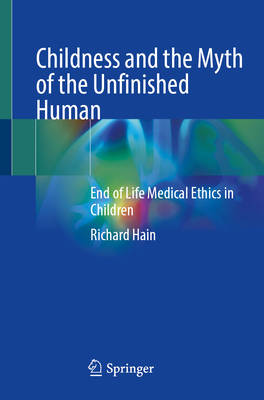
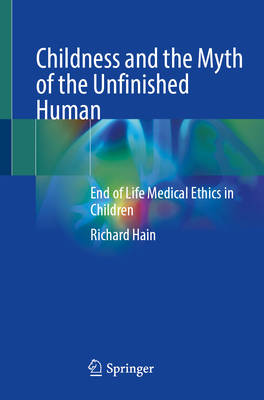
Childness and the Myth of the Unfinished Human
End of Life Medical Ethics in Children
Richard Hain
Paperback | Engels
€ 108,45
+ 216 punten
Omschrijving
This book offers a radical reassessment of the value of a child; one that does not rely on reference to her value to adults, or to her resemblance to adults, or even to her potential to become an adult in the future. Children are dependent on adults to speak for them. The main thesis of this book is that, when it comes to moral reasoning, that dependence can leave children vulnerable, because adults assume that the best way to exist is as an adult. Ethical theories accordingly typically privilege capacities that are normal for adults, but do not characterise the normal child. Or they might reference the value a child has to the adults around her, rather than explaining a child s value in her own terms. Bioethics is, on the whole, unapologetically adult-normative.
The author argues that such ethical theories do not serve children well. Drawing on neuroscience, philosophy and his own experience as a paediatrician specialising in the care of dying children, Dr. Hain sets out a way of explaining a child s value that references instead the real-world nature of the child. He then considers how current medical ethics might look without adult-normative distortion.
This book is aimed at ethicists and moral philosophers or theologians, as well as medical and law students with an interest in ethics in children. It will also interest doctors and nurses working with children in disciplines such as palliative care, intensive care, psychiatry, and those working alongside clinical teams in bioethics and chaplaincy.
Specificaties
Betrokkenen
- Auteur(s):
- Uitgeverij:
Inhoud
- Aantal bladzijden:
- 182
- Taal:
- Engels
Eigenschappen
- Productcode (EAN):
- 9783032121103
- Verschijningsdatum:
- 8/04/2026
- Uitvoering:
- Paperback
- Formaat:
- Trade paperback (VS)
- Afmetingen:
- 155 mm x 235 mm


Alleen bij Standaard Boekhandel
+ 216 punten op je klantenkaart van Standaard Boekhandel
AANGERADEN


Beoordelingen
We publiceren alleen reviews die voldoen aan de voorwaarden voor reviews. Bekijk onze voorwaarden voor reviews.