


- Afhalen na 1 uur in een winkel met voorraad
- Gratis thuislevering in België vanaf € 30
- Ruim aanbod met 7 miljoen producten
- Afhalen na 1 uur in een winkel met voorraad
- Gratis thuislevering in België vanaf € 30
- Ruim aanbod met 7 miljoen producten





€ 169,95
+ 339 punten
Eenvoudig bestellen
Veilig betalen


Gratis thuislevering vanaf € 30 (via bpost)
Gratis levering in je Standaard Boekhandel
Omschrijving
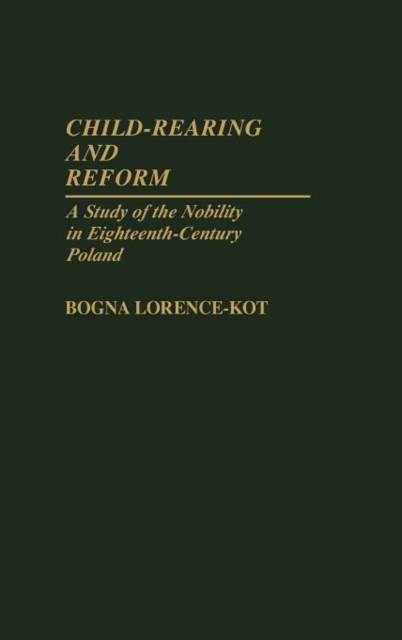
The author analyzes the nature of child-rearing in eighteenth-century Poland and its linkage to the reform movements that swept the country after the first partition in 1772. She finds that family behavior cannot be separated from politics in Polish society: in fact, education and child-rearing were major issues in the reform movement of the 1770s. Lorence-Kot shows where Poland lagged behind Western Europe, and how various reformers proposed to advance Polish society through new methods of raising children in the upper classes. The resistant attitudes of Polish parents are examined in detail, as are their attitudes toward their children, corporal punishment, schooling, and other child-related issues. The author explores the push for a wholesale adoption of French models of child-care and education, as well as the later reforms which met with the modern demands of European society.
Specificaties
Betrokkenen
- Auteur(s):
- Uitgeverij:
Inhoud
- Aantal bladzijden:
- 182
- Taal:
- Engels
- Reeks:
Eigenschappen
- Productcode (EAN):
- 9780313245008
- Verschijningsdatum:
- 20/08/1985
- Uitvoering:
- Hardcover
- Formaat:
- Genaaid
- Afmetingen:
- 156 mm x 234 mm
- Gewicht:
- 430 g


Alleen bij Standaard Boekhandel
+ 339 punten op je klantenkaart van Standaard Boekhandel
CADEAU

AANGERADEN


Beoordelingen
We publiceren alleen reviews die voldoen aan de voorwaarden voor reviews. Bekijk onze voorwaarden voor reviews.