


- Afhalen na 1 uur in een winkel met voorraad
- Gratis thuislevering in België vanaf € 30
- Ruim aanbod met 7 miljoen producten
- Afhalen na 1 uur in een winkel met voorraad
- Gratis thuislevering in België vanaf € 30
- Ruim aanbod met 7 miljoen producten





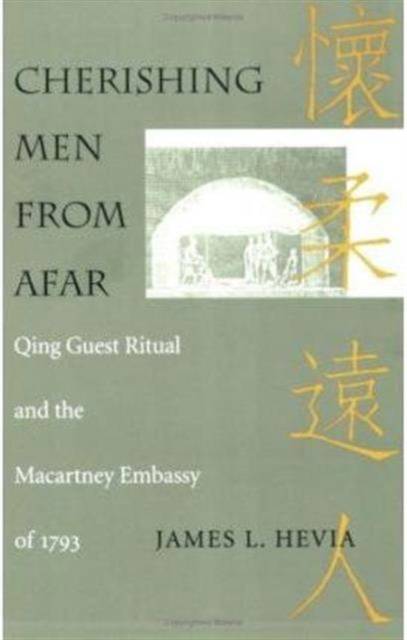
Cherishing Men from Afar
Qing Guest Ritual and the Macartney Embassy of 1793
James L Hevia
Paperback | Engels
€ 44,45
+ 88 punten
Omschrijving
In the late eighteenth century two expansive Eurasian empires met formally for the first time-the Manchu or Qing dynasty of China and the maritime empire of Great Britain. The occasion was the mission of Lord Macartney, sent by the British crown and sponsored by the East India Company, to the court of the Qianlong emperor. Cherishing Men from Afar looks at the initial confrontation between these two empires from a historical perspective informed by the insights of contemporary postcolonial criticism and cultural studies.
The history of this encounter, like that of most colonial and imperial encounters, has traditionally been told from the Europeans' point of view. In this book, James L. Hevia consults Chinese sources-many previously untranslated-for a broader sense of what Qing court officials understood; and considers these documents in light of a sophisticated anthropological understanding of Qing ritual processes and expectations. He also reexamines the more familiar British accounts in the context of recent critiques of orientalism and work on the development of the bourgeois subject. Hevia's reading of these sources reveals the logics of two discrete imperial formations, not so much impaired by the cultural misunderstandings that have historically been attributed to their meeting, but animated by differing ideas about constructing relations of sovereignty and power. His examination of Chinese and English-language scholarly treatments of this event, both historical and contemporary, sheds new light on the place of the Macartney mission in the dynamics of colonial and imperial encounters.
The history of this encounter, like that of most colonial and imperial encounters, has traditionally been told from the Europeans' point of view. In this book, James L. Hevia consults Chinese sources-many previously untranslated-for a broader sense of what Qing court officials understood; and considers these documents in light of a sophisticated anthropological understanding of Qing ritual processes and expectations. He also reexamines the more familiar British accounts in the context of recent critiques of orientalism and work on the development of the bourgeois subject. Hevia's reading of these sources reveals the logics of two discrete imperial formations, not so much impaired by the cultural misunderstandings that have historically been attributed to their meeting, but animated by differing ideas about constructing relations of sovereignty and power. His examination of Chinese and English-language scholarly treatments of this event, both historical and contemporary, sheds new light on the place of the Macartney mission in the dynamics of colonial and imperial encounters.
Specificaties
Betrokkenen
- Auteur(s):
- Uitgeverij:
Inhoud
- Aantal bladzijden:
- 312
- Taal:
- Engels
Eigenschappen
- Productcode (EAN):
- 9780822316374
- Verschijningsdatum:
- 25/07/1995
- Uitvoering:
- Paperback
- Formaat:
- Trade paperback (VS)
- Afmetingen:
- 152 mm x 229 mm
- Gewicht:
- 521 g


Alleen bij Standaard Boekhandel
+ 88 punten op je klantenkaart van Standaard Boekhandel
Cadeau

AANGERADEN


Beoordelingen
We publiceren alleen reviews die voldoen aan de voorwaarden voor reviews. Bekijk onze voorwaarden voor reviews.