


- Afhalen na 1 uur in een winkel met voorraad
- Gratis thuislevering in België vanaf € 30
- Ruim aanbod met 7 miljoen producten
- Afhalen na 1 uur in een winkel met voorraad
- Gratis thuislevering in België vanaf € 30
- Ruim aanbod met 7 miljoen producten





€ 288,45
+ 576 punten
Omschrijving
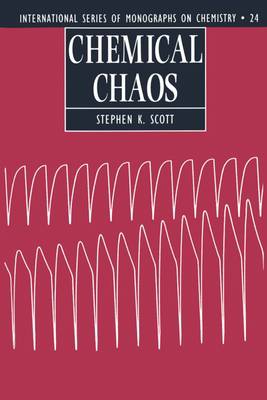
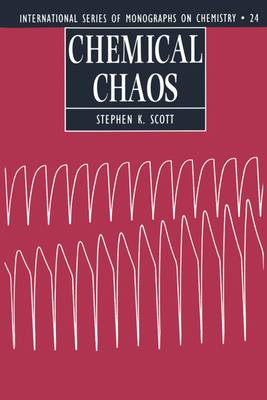
Although chaos theory challenges fundamental ideas in all areas of science, many of the most intriguing and illustrative examples arise in chemistry. This valuable and penetrating account of chemical chaos reviews both theoretical and experimental approaches to the subject, emphasizing the simple features that combine to produce "order within disorder." The book details how chaos does not appear suddenly or at random, but is created through one of a small number of highly ordered sequences of increasing complexity. The author begins by revealing the links between chemical kinetics and the interdisciplinary subject of dynamical systems. He goes to introduce various bifurcation sequences through representative model schemes which emphasize generality and simplicity. Various experimental and diagnostic techniques to test for chaos are then described, and the book concludes with a review of experimental studies across a wide range of chemical and biochemical systems. The book will be welcomed by researchers and students of physical chemistry, physics, mathematics, biology, and chemical and mechanical engineering.
Specificaties
Betrokkenen
- Auteur(s):
- Uitgeverij:
Inhoud
- Aantal bladzijden:
- 472
- Taal:
- Engels
- Reeks:
- Reeksnummer:
- nr. 24
Eigenschappen
- Productcode (EAN):
- 9780198556589
- Verschijningsdatum:
- 30/12/1993
- Uitvoering:
- Paperback
- Formaat:
- Trade paperback (VS)
- Afmetingen:
- 156 mm x 235 mm
- Gewicht:
- 848 g


Alleen bij Standaard Boekhandel
+ 576 punten op je klantenkaart van Standaard Boekhandel
CADEAU

AANGERADEN


Beoordelingen
We publiceren alleen reviews die voldoen aan de voorwaarden voor reviews. Bekijk onze voorwaarden voor reviews.