


- Afhalen na 1 uur in een winkel met voorraad
- Gratis thuislevering in België vanaf € 30
- Ruim aanbod met 7 miljoen producten
- Afhalen na 1 uur in een winkel met voorraad
- Gratis thuislevering in België vanaf € 30
- Ruim aanbod met 7 miljoen producten





Omschrijving
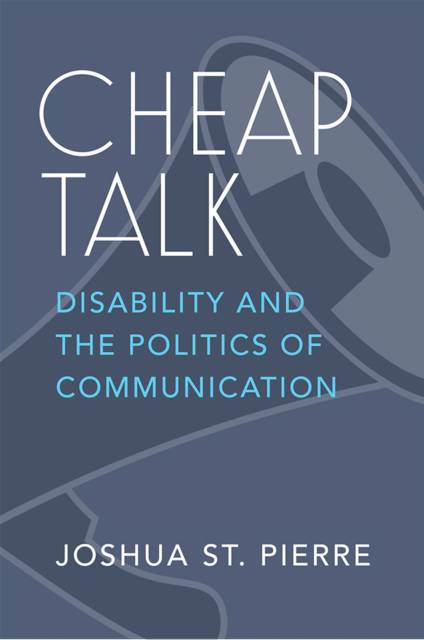
In Cheap Talk: Disability and the Politics of Communication, Joshua St. Pierre flips the script on communication disability, positioning the unruly, disabled speaker at the center of analysis to challenge the belief that more communication is unquestionably good. Working with Gilles Deleuze's suggestion that "[w]e don't suffer these days from any lack of communication, but rather from all the forces making us say things when we've nothing much to say," St. Pierre brings together the unlikely trio of the dysfluent speaker, the talking head, and the troll to show how speech is made cheap--and produced and repaired within human bodies--to meet the inhuman needs of capital. The book explores how technologies, like social media and the field of speech-language pathology, create smooth sites of contact that are exclusionary for disabled speakers and looks to the political possibilities of disabled voices to "de-face" the power of speech now entwined with capital.
Specificaties
Betrokkenen
- Auteur(s):
- Uitgeverij:
Inhoud
- Aantal bladzijden:
- 180
- Taal:
- Engels
- Reeks:
Eigenschappen
- Productcode (EAN):
- 9780472055340
- Verschijningsdatum:
- 25/05/2022
- Uitvoering:
- Paperback
- Formaat:
- Trade paperback (VS)
- Afmetingen:
- 150 mm x 226 mm
- Gewicht:
- 158 g


Alleen bij Standaard Boekhandel
+ 60 punten op je klantenkaart van Standaard Boekhandel

Beoordelingen
We publiceren alleen reviews die voldoen aan de voorwaarden voor reviews. Bekijk onze voorwaarden voor reviews.