



Bedankt voor het vertrouwen het afgelopen jaar! Om jou te bedanken bieden we GRATIS verzending (in België) aan op alles gedurende de hele maand januari.
- Afhalen na 1 uur in een winkel met voorraad
- In januari gratis thuislevering in België
- Ruim aanbod met 7 miljoen producten
Bedankt voor het vertrouwen het afgelopen jaar! Om jou te bedanken bieden we GRATIS verzending (in België) aan op alles gedurende de hele maand januari.
- Afhalen na 1 uur in een winkel met voorraad
- In januari gratis thuislevering in België
- Ruim aanbod met 7 miljoen producten





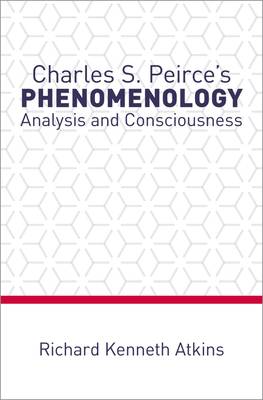
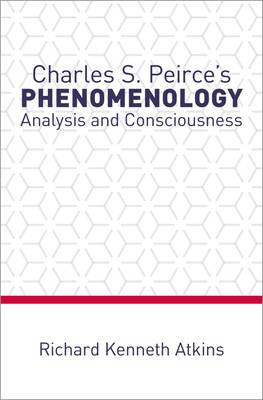
Charles S. Peirce's Phenomenology
Analysis and Consciousness
Richard Kenneth Atkins
Hardcover | Engels
€ 177,45
+ 354 punten
Omschrijving
No reasonable person would deny that the sound of a falling pin is less intense than the feeling of a hot poker pressed against the skin, or that the recollection of something seen decades earlier is less vivid than beholding it in the present. Yet John Locke is quick to dismiss a blind man's report that the color scarlet is like the sound of a trumpet, and Thomas Nagel similarly avers that such loose intermodal analogies are of little use in developing an objective phenomenology. Charles Sanders Peirce (1839-1914), by striking contrast, maintains rather that the blind man is correct. Peirce's reasoning stems from his phenomenology, which has received little attention as compared with his logic, pragmatism, or semiotics. Peirce argues that one can describe the similarities and differences between such experiences as seeing a scarlet red and hearing a trumpet's blare or hearing a falling pin and feeling a hot poker. Drawing on the Kantian idea that the analysis of consciousness should take as its guide formal logic, Peirce contends that we can construct a table of the elements of consciousness, just as Dmitri Mendeleev constructed a table of the chemical elements. By showing that the elements of consciousness fall into distinct classes, Peirce makes significant headway in developing the very sort of objective phenomenology which vindicates the studious blind man Locke so derides. Charles S. Peirce's Phenomenology shows how his phenomenology rests on his logic, gives an account of Peirce's phenomenology as science, and then shows how his work can be used to develop an objective phenomenological vocabulary. Ultimately, Richard Kenneth Atkins shows how Peirce's pioneering and distinctive formal logic led him to a phenomenology that addresses many of the questions philosophers of mind continue to raise today.
Specificaties
Betrokkenen
- Auteur(s):
- Uitgeverij:
Inhoud
- Aantal bladzijden:
- 272
- Taal:
- Engels
Eigenschappen
- Productcode (EAN):
- 9780190887179
- Verschijningsdatum:
- 20/11/2018
- Uitvoering:
- Hardcover
- Formaat:
- Genaaid
- Afmetingen:
- 163 mm x 236 mm
- Gewicht:
- 476 g


Alleen bij Standaard Boekhandel
+ 354 punten op je klantenkaart van Standaard Boekhandel
SOLDEN


Beoordelingen
We publiceren alleen reviews die voldoen aan de voorwaarden voor reviews. Bekijk onze voorwaarden voor reviews.