


- Afhalen na 1 uur in een winkel met voorraad
- Gratis thuislevering in België vanaf € 30
- Ruim aanbod met 7 miljoen producten
- Afhalen na 1 uur in een winkel met voorraad
- Gratis thuislevering in België vanaf € 30
- Ruim aanbod met 7 miljoen producten





Omschrijving
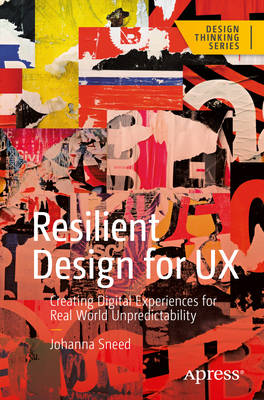
Chaos Design introduces a new way of thinking about user experience, service, and product design by helping practitioners anticipate failure, embrace unpredictability, and design for resilience. Unlike traditional design methodologies that assume predictable users and stable systems and the 'best case scenario, ' chaos design acknowledges that failures, disruptions, and unpredictable user behavior are inevitable. The book takes inspiration from Chaos Engineering (failure injection in systems), Resilience Engineering (anticipate/respond/learn principles), and Complexity Theory (emergent user behavior and nonlinear outcomes) to help build more resilient digital experiences that can withstand real-world unpredictability.
This book offers a structured approach to Chaos Design, guiding readers through two phases, theoretical foundations and a workshop facilitation guide to put ideas into practice.
We shall begin with a deep dive into chaos-informed design thinking, stress-testing UX, and designing for edge cases and failure scenarios. We will explore how resilience principles from engineering apply to interfaces, services, and user experiences, and how we should place a focus on anticipating and mitigating chaos while using it as a tool for adaptability within a product.
Once we have explored the key concepts, we will move on to running a Chaos Design workshop as well as exercises for solo designers and product teams, including failure injection exercises and resilience mapping that teams can use to apply the concept of chaos design in real-world projects.
You Will Learn:
- How to stress-test interfaces and systems to uncover hidden failure points before they impact users
- How to design for unpredictability and emergent user behavior rather than relying on rigid workflows and ideal scenarios
- How to apply resilience strategies from engineering to create products that adapt and recover from disruptions
- How to turn failure into a design tool through failure injection and resilience mapping
- How to apply interface design patterns that remain functional or support users when components break or conditions change
This Book is for:
UX, product and service designers as well as UX researchers, strategists, and product managers who want to go beyond traditional design processes and build products that not only thrive under uncertainty but can also benefit from it.
Specificaties
Betrokkenen
- Auteur(s):
- Uitgeverij:
Inhoud
- Taal:
- Engels
- Reeks:
Eigenschappen
- Productcode (EAN):
- 9798868826337
- Verschijningsdatum:
- 11/09/2026
- Uitvoering:
- Paperback
- Formaat:
- Trade paperback (VS)
- Afmetingen:
- 155 mm x 235 mm


Alleen bij Standaard Boekhandel
+ 138 punten op je klantenkaart van Standaard Boekhandel
AANGERADEN


Beoordelingen
We publiceren alleen reviews die voldoen aan de voorwaarden voor reviews. Bekijk onze voorwaarden voor reviews.