


- Afhalen na 1 uur in een winkel met voorraad
- Gratis thuislevering in België vanaf € 30
- Ruim aanbod met 7 miljoen producten
- Afhalen na 1 uur in een winkel met voorraad
- Gratis thuislevering in België vanaf € 30
- Ruim aanbod met 7 miljoen producten





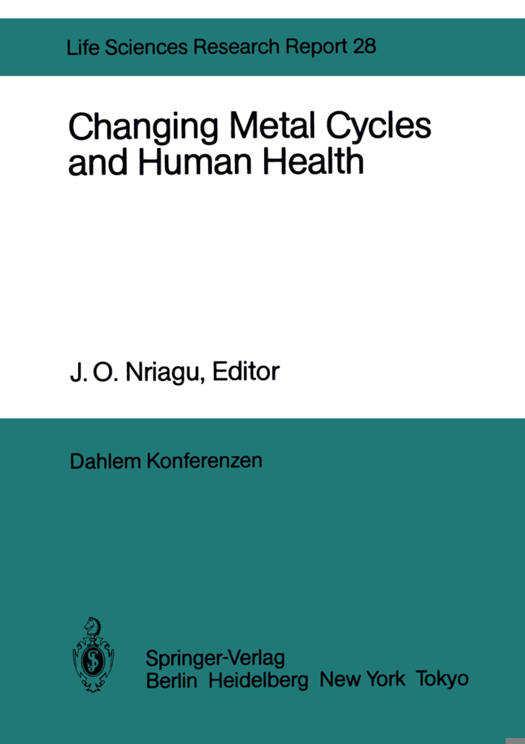
Changing Metal Cycles and Human Health
Report of the Dahlem Workshop on Changing Metal Cycles and Human Health, Berlin 1983, March 20-25
€ 150,48
+ 300 punten
Omschrijving
of metal interactions with subcellular biochemical systems usually either are metabolites of the system affected (porphyrinurias) or represent some specific function of a cellular system being impaired (proteinurias). One typically finds a continuum of symptoms, from the subtle or so-called "no effect" bio- chemical and physiological indicators of exposure to severe clinical disease and death. This continuum is the basis of much of the controversy since many health officials follow the traditional practice of applying the "threshold- health-effect" concept in evaluating the problems of environmental exposure to metals. The past decade or so, however, has seen a vast increase in our understanding of the effects of elevated concentrations of toxic metals in local populations and ecosystems. At the same time, there is a growing awareness that the effects of the metals which occur naturally in the environment must be distinguished from those imposed by the pollutant fraction. This point was amply document- ed in a recent study of cadmium intake and cadmium in a number of human tissues in Sweden, Japan, and the United States, which showed fairly conclu- sively that the background exposure in Japan was about threefold higher than in the other two countries (2). One immediate implication is that any health ef- fect studies of cadmium in Japan using control groups within that country are liable to underestimate the difference between the exposed and the control groups simply because of the the high "background" intake.
Specificaties
Betrokkenen
- Uitgeverij:
Inhoud
- Aantal bladzijden:
- 446
- Taal:
- Engels
- Reeks:
- Reeksnummer:
- nr. 28
Eigenschappen
- Productcode (EAN):
- 9783642693168
- Verschijningsdatum:
- 7/12/2011
- Uitvoering:
- Paperback
- Formaat:
- Trade paperback (VS)
- Afmetingen:
- 148 mm x 210 mm
- Gewicht:
- 548 g


Alleen bij Standaard Boekhandel
+ 300 punten op je klantenkaart van Standaard Boekhandel

Beoordelingen
We publiceren alleen reviews die voldoen aan de voorwaarden voor reviews. Bekijk onze voorwaarden voor reviews.