


- Afhalen na 1 uur in een winkel met voorraad
- Gratis thuislevering in België vanaf € 30
- Ruim aanbod met 7 miljoen producten
- Afhalen na 1 uur in een winkel met voorraad
- Gratis thuislevering in België vanaf € 30
- Ruim aanbod met 7 miljoen producten





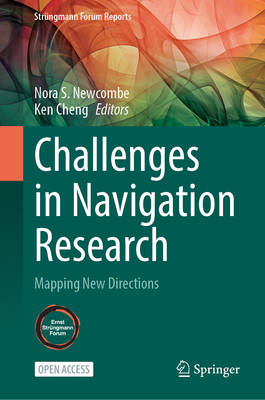
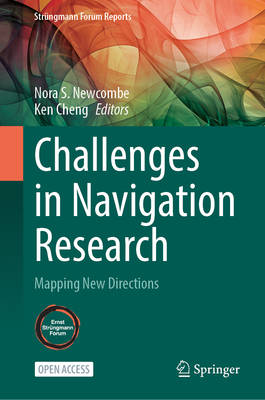
Challenges in Navigation Research
Mapping New Directions
€ 54,45
+ 108 punten
Omschrijving
This open access book presents a multidisciplinary synthesis of research on animal navigation, integrating perspectives from behavior, neuroscience, and ecology to advance understanding of how animals orient and move within their environments. Successful navigation is essential for survival. How animals move through complex landscapes, cross vast oceans, or traverse barren deserts has long intrigued scientists. For over a century, research has sought to uncover the mechanisms that enable such remarkable feats. The knowledge gained has far-reaching implications--from enhancing mobility and independence in aging populations to shaping the design of advanced navigational technologies. In the past decade, rapid advances in computational methods have fueled a surge in behavioral and neural data, placing the study of navigation at the forefront of scientific progress. Yet, significant challenges persist. Fragmentation across disciplines and levels of analysis has hindered integration, and the sheer volume of findings makes synthesis difficult. To confront these challenges, the Ernst Strüngmann Forum brought together experts from diverse fields to integrate research on biological navigation. This volume presents the outcomes of that multidisciplinary exchange, integrating perspectives across behavioral, cellular, circuit, and systems levels, and spanning species, environments, and individual differences. It delineates unifying principles and frameworks to guide future research on navigation across taxa, developmental stages, and descriptive levels, and outlines agendas to advance the field.
Specificaties
Betrokkenen
- Uitgeverij:
Inhoud
- Aantal bladzijden:
- 481
- Taal:
- Engels
- Reeks:
Eigenschappen
- Productcode (EAN):
- 9783032205629
- Verschijningsdatum:
- 2/04/2026
- Uitvoering:
- Hardcover
- Formaat:
- Genaaid
- Afmetingen:
- 156 mm x 234 mm
- Gewicht:
- 866 g

Alleen bij Standaard Boekhandel
+ 108 punten op je klantenkaart van Standaard Boekhandel
AANGERADEN


Beoordelingen
We publiceren alleen reviews die voldoen aan de voorwaarden voor reviews. Bekijk onze voorwaarden voor reviews.