


- Afhalen na 1 uur in een winkel met voorraad
- Gratis thuislevering in België vanaf € 30
- Ruim aanbod met 7 miljoen producten
- Afhalen na 1 uur in een winkel met voorraad
- Gratis thuislevering in België vanaf € 30
- Ruim aanbod met 7 miljoen producten





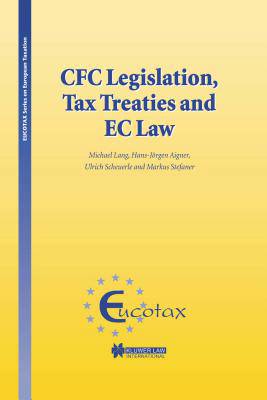
CFC Legislation, Tax Treaties and EC Law
Lang
€ 279,64
+ 559 punten
Omschrijving
CFC legislations are common to most OECD Member States. They are introduced to combat tax evasion by shifting profits to corporations situated in low tax jurisdictions. Without the introduction of CFC legislations, residents are free to set up corporations abroad to lower their tax burden. The reason is the shielding effect of non-resident corporations. Thus, especially high tax countries feel the need to deny the tax benefits of Controlled Foreign Corporations in low tax countries. 70 experts, including the National and General Reporters, convened for a joint conference on CFC legislations in Rust (Austria) from 3 ¿ 6 July 2003. 23 National Reports from nearly all EU countries as well as Australia, the Czech Republic, Estonia, Hungary, Israel, Lithuania, New Zealand and Norway deal with domestic CFC provisions and the influence of DTCs and EC law on CFC legislations. These National Reports and a summarizing General Report have been compiled and published in this volume.
Specificaties
Betrokkenen
- Auteur(s):
- Uitgeverij:
Inhoud
- Aantal bladzijden:
- 656
- Taal:
- Engels
- Reeks:
Eigenschappen
- Productcode (EAN):
- 9789041122841
- Verschijningsdatum:
- 1/02/2004
- Uitvoering:
- Hardcover
- Formaat:
- Genaaid
- Afmetingen:
- 167 mm x 246 mm
- Gewicht:
- 1152 g


Alleen bij Standaard Boekhandel
+ 559 punten op je klantenkaart van Standaard Boekhandel
Cadeau

AANGERADEN


Beoordelingen
We publiceren alleen reviews die voldoen aan de voorwaarden voor reviews. Bekijk onze voorwaarden voor reviews.