


- Afhalen na 1 uur in een winkel met voorraad
- Gratis thuislevering in België vanaf € 30
- Ruim aanbod met 7 miljoen producten
- Afhalen na 1 uur in een winkel met voorraad
- Gratis thuislevering in België vanaf € 30
- Ruim aanbod met 7 miljoen producten





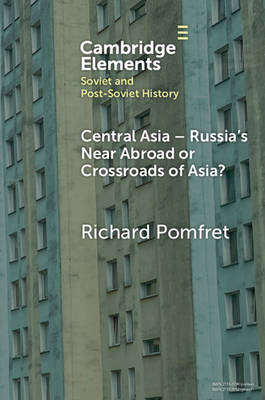
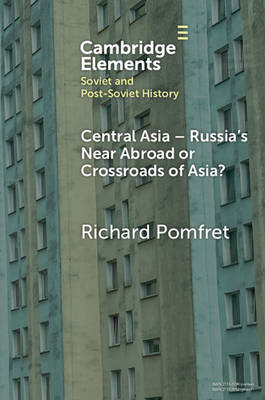
Central Asia - Russia's Near Abroad or Crossroads of Asia?
Richard Pomfret
€ 24,45
+ 48 punten
Uitvoering
Omschrijving
This Element assesses the claim that Central Asian countries hold a special position as Russia's near abroad. The region has been important for millennia, and only after conquest in the second half of the nineteenth century did Russia become important for Central Asia. This connection became stronger after 1917 as Central Asia was integrated into the Soviet economy, with rail, roads, and pipelines all leading north to Russia. After independence, these connections were gradually modified by new trade links and by new infrastructure, while Russia's demand for unskilled labour during the 1999-2014 oil boom created a new economic dependency for Tajikistan and the Kyrgyz Republic. In 1991, political independence could not be accompanied by economic independence, but over the next three decades economic dependence on Russia was reduced, and the Central Asian countries have felt increasingly able to adopt political positions independent of Russia.
Specificaties
Betrokkenen
- Auteur(s):
- Uitgeverij:
Inhoud
- Aantal bladzijden:
- 66
- Taal:
- Engels
- Reeks:
Eigenschappen
- Productcode (EAN):
- 9781009507752
- Verschijningsdatum:
- 20/03/2025
- Uitvoering:
- Paperback
- Formaat:
- Trade paperback (VS)
- Afmetingen:
- 152 mm x 229 mm
- Gewicht:
- 104 g


Alleen bij Standaard Boekhandel
+ 48 punten op je klantenkaart van Standaard Boekhandel
Cadeau

AANGERADEN


Beoordelingen
We publiceren alleen reviews die voldoen aan de voorwaarden voor reviews. Bekijk onze voorwaarden voor reviews.