



Je cadeautjes zeker op tijd in huis hebben voor de feestdagen? Kom langs in onze winkels en vind het perfecte geschenk!
- Afhalen na 1 uur in een winkel met voorraad
- Gratis thuislevering in België vanaf € 30
- Ruim aanbod met 7 miljoen producten
Je cadeautjes zeker op tijd in huis hebben voor de feestdagen? Kom langs in onze winkels en vind het perfecte geschenk!
- Afhalen na 1 uur in een winkel met voorraad
- Gratis thuislevering in België vanaf € 30
- Ruim aanbod met 7 miljoen producten





€ 167,95
+ 335 punten
Uitvoering
Omschrijving
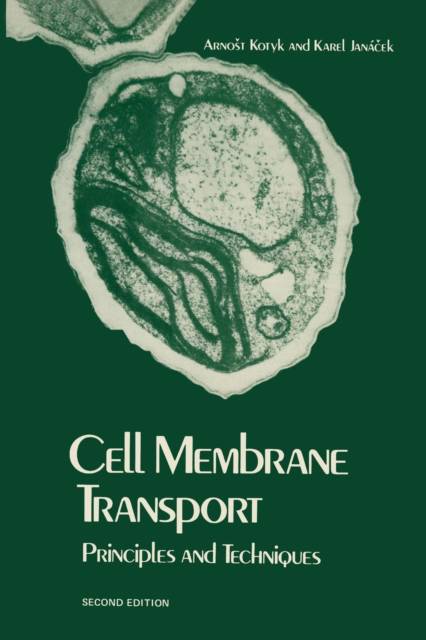
TO THE SECOND EDITION When preparing the manuscript for the original edition of this book we were only partly aware of the pace at which the field of membrane transport was developing and at which new ideas as well as new techniques would be applied to it. The fact is that some of the chapters are now outdated (e. g., the one on the molecular aspects of transport) and many others require revision in the light of new information that has appeared in the past five years. However, it is also true that we overemphasized in the first edition certain points that now appear less important and underestimated the impact of certain others that have since assumed a position among the most forcefully discussed topics of membrane research. In making amends, it was thus thought useful to include the discussion of these latter problems both in the theoretical and in the comparative sections and, on the other hand, to omit some of the less topical subjects. There was a different reason for rewriting the section on kidney and for dropping the section on mito- chondria. The help of an expert nephrologist was enlisted for improving chapter 24, while it was decided that mitochondria represent a special field both conceptually (being only subcellular particles) and methodologically (more indirect estimation techniques being involved than with whole cells or tissues) and that more adequate information can be found in treatises specializing in work with mitochondria.
Specificaties
Betrokkenen
- Auteur(s):
- Uitgeverij:
Inhoud
- Aantal bladzijden:
- 584
- Taal:
- Engels
Eigenschappen
- Productcode (EAN):
- 9781461344155
- Verschijningsdatum:
- 18/10/2011
- Uitvoering:
- Paperback
- Formaat:
- Trade paperback (VS)
- Afmetingen:
- 156 mm x 234 mm
- Gewicht:
- 839 g



Alleen bij Standaard Boekhandel
+ 335 punten op je klantenkaart van Standaard Boekhandel
CADEAU


Beoordelingen
We publiceren alleen reviews die voldoen aan de voorwaarden voor reviews. Bekijk onze voorwaarden voor reviews.