


- Afhalen na 1 uur in een winkel met voorraad
- Gratis thuislevering in België vanaf € 30
- Ruim aanbod met 7 miljoen producten
- Afhalen na 1 uur in een winkel met voorraad
- Gratis thuislevering in België vanaf € 30
- Ruim aanbod met 7 miljoen producten





€ 41,95
+ 83 punten
Eenvoudig bestellen
Veilig betalen


Gratis thuislevering vanaf € 30 (via bpost)
Gratis levering in je Standaard Boekhandel
Omschrijving
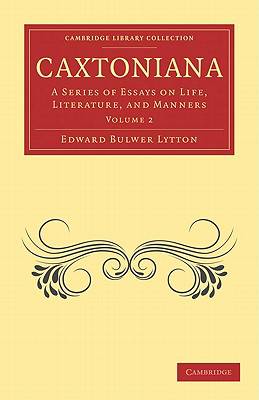
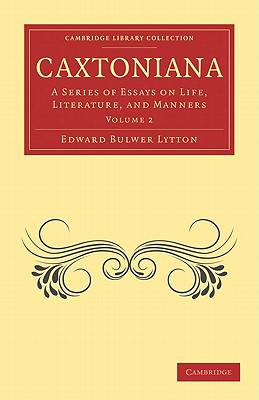
In 1849 Edward Bulwer Lytton published the popular novel The Caxtons, about an eccentric family who claimed descent from the printer William Caxton. Its hero, Pisistratus Caxton, was named as the author of two subsequent works, My Novel (1853) and What Will He Do With It? (1859), which were less successful. Bulwer Lytton was referring to those novels when he named this two-volume collection of literary and philosophical essays Caxtoniana, first published in 1863 and here reprinted from the 1864 edition. They were the result of his wide reading on scientific, philosophical and occult subjects which he made use of in several of his works, particularly the supernatural A Strange Story (1862). Many of the essays in Caxtoniana deal with morality and the artist, others with literary style, psychology, politics and readership. Lytton claimed that these subjects were expressed in the form of romance in the 'Caxton' novels.
Specificaties
Betrokkenen
- Auteur(s):
- Uitgeverij:
Inhoud
- Aantal bladzijden:
- 334
- Taal:
- Engels
- Reeks:
Eigenschappen
- Productcode (EAN):
- 9781108072793
- Verschijningsdatum:
- 02/06/2011
- Uitvoering:
- Paperback
- Formaat:
- Trade paperback (VS)
- Afmetingen:
- 140 mm x 216 mm
- Gewicht:
- 426 g


Alleen bij Standaard Boekhandel
+ 83 punten op je klantenkaart van Standaard Boekhandel
CADEAU

AANGERADEN


Beoordelingen
We publiceren alleen reviews die voldoen aan de voorwaarden voor reviews. Bekijk onze voorwaarden voor reviews.