


- Afhalen na 1 uur in een winkel met voorraad
- Gratis thuislevering in België vanaf € 30
- Ruim aanbod met 7 miljoen producten
- Afhalen na 1 uur in een winkel met voorraad
- Gratis thuislevering in België vanaf € 30
- Ruim aanbod met 7 miljoen producten





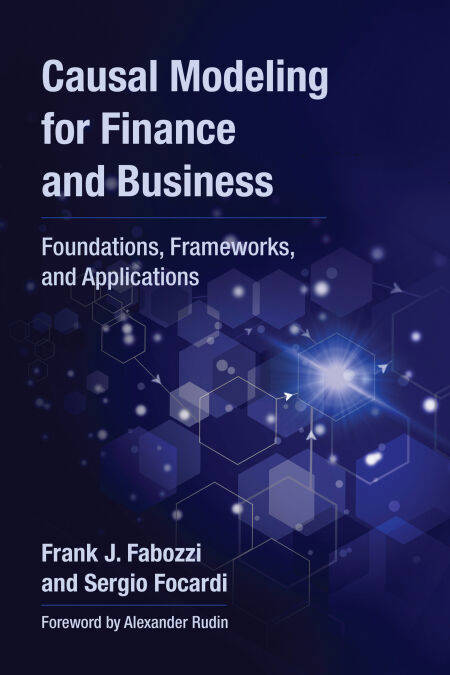
Causal Modeling for Finance and Business E-BOOK
Foundations, Frameworks, and Applications
Frank J. Fabozzi, Sergio Focardi
E-book | Engels
€ 59,14
+ 59 punten
Uitvoering
Omschrijving
A comprehensive look at causality’s theoretical and practical aspects in economics and finance.
In Causal Modeling for Finance and Business, Frank Fabozzi and Sergio Focardi offer a foundation for understanding causal relationships and their importance in complex systems. Topics include the theory of graphs, probabilistic frameworks, structural causal models, algorithms for learning causal structures, and the empirical testing of these models.
The book emphasizes applying and deploying causal models in real-world business and investment scenarios. However, it also offers a novel theoretical perspective on causal modeling. Fabozzi and Focardi argue that causation is not a law of nature, but a characteristic of causal systems. If we accept the modern idea of causation as manipulability, causal systems are characterized by causal relationships as well as purely descriptive functional relationships.
With these arguments in mind, the book addresses a critical gap in understanding and applying causal reasoning in complex systems. While correlations have often been relied upon in data analysis, decision-making in business and economics demands a deeper understanding of causation and functional relationships to drive actionable outcomes.
The book’s objective is to provide a comprehensive resource that bridges foundational theories and practical applications of causal models. By integrating recent advancements in artificial intelligence, probabilistic logic, and graph theory, the authors offer a robust framework for researchers, practitioners, and decision-makers to harness the power of causality in solving intricate problems.
In Causal Modeling for Finance and Business, Frank Fabozzi and Sergio Focardi offer a foundation for understanding causal relationships and their importance in complex systems. Topics include the theory of graphs, probabilistic frameworks, structural causal models, algorithms for learning causal structures, and the empirical testing of these models.
The book emphasizes applying and deploying causal models in real-world business and investment scenarios. However, it also offers a novel theoretical perspective on causal modeling. Fabozzi and Focardi argue that causation is not a law of nature, but a characteristic of causal systems. If we accept the modern idea of causation as manipulability, causal systems are characterized by causal relationships as well as purely descriptive functional relationships.
With these arguments in mind, the book addresses a critical gap in understanding and applying causal reasoning in complex systems. While correlations have often been relied upon in data analysis, decision-making in business and economics demands a deeper understanding of causation and functional relationships to drive actionable outcomes.
The book’s objective is to provide a comprehensive resource that bridges foundational theories and practical applications of causal models. By integrating recent advancements in artificial intelligence, probabilistic logic, and graph theory, the authors offer a robust framework for researchers, practitioners, and decision-makers to harness the power of causality in solving intricate problems.
Specificaties
Betrokkenen
- Auteur(s):
- Uitgeverij:
Inhoud
- Aantal bladzijden:
- 288
- Taal:
- Engels
Eigenschappen
- Productcode (EAN):
- 9780262054287
- Verschijningsdatum:
- 3/08/2026
- Uitvoering:
- E-book
- Beveiligd met:
- Adobe DRM
- Formaat:
- ePub


Alleen bij Standaard Boekhandel
+ 59 punten op je klantenkaart van Standaard Boekhandel
Cadeau

AANGERADEN


Beoordelingen
We publiceren alleen reviews die voldoen aan de voorwaarden voor reviews. Bekijk onze voorwaarden voor reviews.