


- Afhalen na 1 uur in een winkel met voorraad
- Gratis thuislevering in België vanaf € 30
- Ruim aanbod met 7 miljoen producten
- Afhalen na 1 uur in een winkel met voorraad
- Gratis thuislevering in België vanaf € 30
- Ruim aanbod met 7 miljoen producten





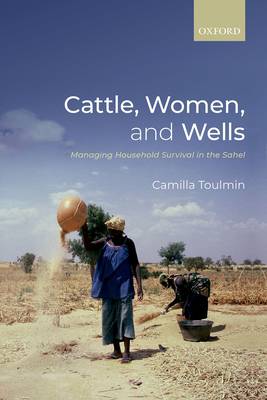
Cattle, Women, and Wells
Managing Household Survival in the Sahel
Camilla Toulmin
Paperback | Engels
€ 74,45
+ 148 punten
Omschrijving
How people adapt and survive in the harsh environment of the drought-prone Sahelian region to the south of the Saharan desert forms the subject of this book.
The author concentrates on the choices facing farmers in a small village in central Mali, West Africa. These farmers have had continually to adapt their farming methods in order to survive. The study shows how such changes have taken place and why some families are more successful than others in surviving and prospering. It provides an analysis of millet yields, and of returns to investment in ploughs, wells, and breeding cattle. Decisions regarding marriage, child-rearing, and household organization are discussed within an economic framework to demonstrate the strong economic rationale behind choices made in these spheres.
The book concludes that larger, more diverse households found within this society (containing as many as forty to sixty people) are much better able to resist the risks of drought and illness than are small nuclear family groups. Environmental issues are shown to be crucial to the longer term viability of such a community.
The author concentrates on the choices facing farmers in a small village in central Mali, West Africa. These farmers have had continually to adapt their farming methods in order to survive. The study shows how such changes have taken place and why some families are more successful than others in surviving and prospering. It provides an analysis of millet yields, and of returns to investment in ploughs, wells, and breeding cattle. Decisions regarding marriage, child-rearing, and household organization are discussed within an economic framework to demonstrate the strong economic rationale behind choices made in these spheres.
The book concludes that larger, more diverse households found within this society (containing as many as forty to sixty people) are much better able to resist the risks of drought and illness than are small nuclear family groups. Environmental issues are shown to be crucial to the longer term viability of such a community.
Specificaties
Betrokkenen
- Auteur(s):
- Uitgeverij:
Inhoud
- Aantal bladzijden:
- 320
- Taal:
- Engels
Eigenschappen
- Productcode (EAN):
- 9780198853046
- Verschijningsdatum:
- 28/01/2022
- Uitvoering:
- Paperback
- Formaat:
- Trade paperback (VS)
- Afmetingen:
- 152 mm x 226 mm
- Gewicht:
- 498 g


Alleen bij Standaard Boekhandel
+ 148 punten op je klantenkaart van Standaard Boekhandel
Cadeau

AANGERADEN


Beoordelingen
We publiceren alleen reviews die voldoen aan de voorwaarden voor reviews. Bekijk onze voorwaarden voor reviews.