


- Afhalen na 1 uur in een winkel met voorraad
- Gratis thuislevering in België vanaf € 30
- Ruim aanbod met 7 miljoen producten
- Afhalen na 1 uur in een winkel met voorraad
- Gratis thuislevering in België vanaf € 30
- Ruim aanbod met 7 miljoen producten





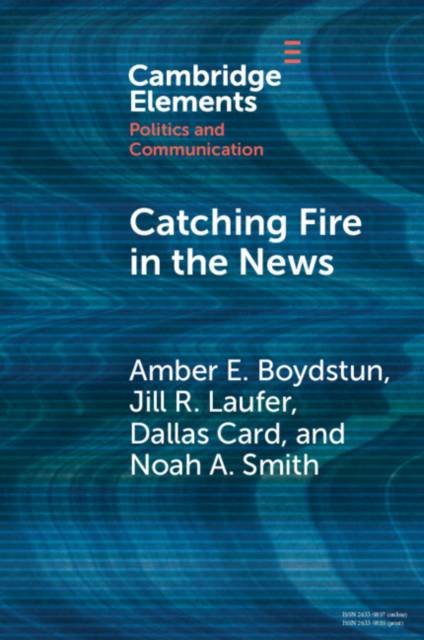
Catching Fire in the News
The Necessary Conditions for Media Storms
Amber E Boydstun, Jill R Laufer, Dallas Card, Noah A Smith
€ 36,45
+ 72 punten
Uitvoering
Omschrijving
Why do some events catch fire in the news, producing a media storm, while many similar events go all but unnoticed? This Element uses a fire triangle analogy to explain the necessary conditions of media storms. The "heat" is the spark: a dramatic event or discovery. The "fuel" is the political and cultural landscape, including similar items in recent news, and current debates that allow the event to be framed in a resonant way. The "oxygen" is the available news agenda space, plus attention the event receives beyond the news (by activists, politicians, people on social media, etc.). Media storms are not easily predictable; it takes the right event, at the right time, with the right momentum of attention. But when the political stars align and a media storm erupts, it can be a window of opportunity for change. This Element is also available as Open Access on Cambridge Core.
Specificaties
Betrokkenen
- Auteur(s):
- Uitgeverij:
Inhoud
- Aantal bladzijden:
- 100
- Taal:
- Engels
- Reeks:
Eigenschappen
- Productcode (EAN):
- 9781009498449
- Verschijningsdatum:
- 26/02/2026
- Uitvoering:
- Paperback
- Formaat:
- Trade paperback (VS)
- Afmetingen:
- 152 mm x 229 mm
- Gewicht:
- 145 g


Alleen bij Standaard Boekhandel
+ 72 punten op je klantenkaart van Standaard Boekhandel
Cadeau

AANGERADEN


Beoordelingen
We publiceren alleen reviews die voldoen aan de voorwaarden voor reviews. Bekijk onze voorwaarden voor reviews.