


- Afhalen na 1 uur in een winkel met voorraad
- Gratis thuislevering in België vanaf € 30
- Ruim aanbod met 7 miljoen producten
- Afhalen na 1 uur in een winkel met voorraad
- Gratis thuislevering in België vanaf € 30
- Ruim aanbod met 7 miljoen producten




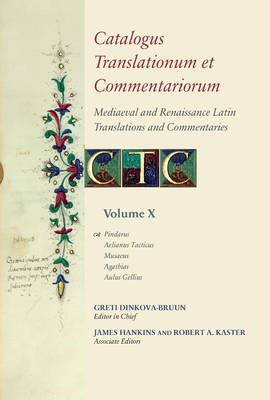
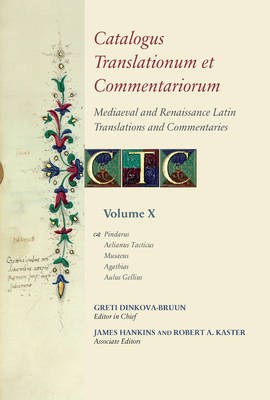
Catalogus Translationum Et Commentariorum
Mediaeval and Renaissance Latin Translations and Commentaries: Annotated Lists and Guides
Greti Dinkova-Bruun
€ 92,75
+ 185 punten
Omschrijving
Founded in 1946 by Paul Oskar Kristeller, the Catalogus Translationum et Commentariorum has become an indispensable research tool for scholars interested in the history of the classical tradition in the West during the Middle Ages and the Renaissance. Each article treats a separate classical author, beginning with a detailed essay on the author's reception from antiquity to A.D. 1600. This ?Fortuna? is followed by a comprehensive list both of manuscript and printed commentaries on each Latin author and, in the case of Greek authors, a list of Latin translations as well. Since the publication of the first volume in 1960, the Catalogus has published articles on nearly a hundred classical authors, with dozens more in active preparation. The project boasts an international team of contributors from fourteen countries in Europe and North America. Given the ever-growing interest in the history of classical reception across departments of English, European languages, and comparative literature, the foundational scholarship that is the hallmark of the CTC has become more vital to research in the humanities than ever. In this volume, the tenth in the series, five full-length articles devoted to Pindar, Aelianus Tacticus, Musaeus, Agathias, and Aulus Gellius are supplemented by addenda and corrigenda to articles previously published on Lucretius, Dionysius Periegetes, and Sallust.
Specificaties
Betrokkenen
- Auteur(s):
- Uitgeverij:
Inhoud
- Aantal bladzijden:
- 440
- Taal:
- Engels
- Reeks:
- Reeksnummer:
- nr. 10
Eigenschappen
- Productcode (EAN):
- 9780888449504
- Verschijningsdatum:
- 28/10/2014
- Uitvoering:
- Hardcover
- Formaat:
- Genaaid
- Afmetingen:
- 162 mm x 236 mm
- Gewicht:
- 839 g


Alleen bij Standaard Boekhandel
+ 185 punten op je klantenkaart van Standaard Boekhandel
Cadeau

AANGERADEN


Beoordelingen
We publiceren alleen reviews die voldoen aan de voorwaarden voor reviews. Bekijk onze voorwaarden voor reviews.